Stainless Steel Stamping: Materials, Methods, Quality and More
Stainless Steel is found in every aspect of life, from kitchen appliances to automotive exhausts, surgical instruments to industrial equipment. Stainless steel stamping is used to create exact and repeatable parts for these applications from flat metal sheets. But process control and planning are essential to getting the results every time. This guide covers the stamping process, a comparison of popular grades such as 304 and 316, tooling, finishing, quality control, challenges and applications. The right manufacturer, Masion, can overcome stainless steel’s work-hardening issues to create reliable, cost-effective parts at scale.
What is stainless steel stamping?
Stainless steel stamping is a metalworking technique that involves cutting or forming sheet metal with a punch and a die. It comprises blanking, piercing, bending, drawing, embossing and coining operations. Stainless steels have a minimum of 10.5% chromium to provide the passive oxide layer that protects them from corrosion. Is it possible to stamp stainless steel? Stamping stainless steel is common throughout industry, but it does require higher press forces, sturdier tooling, and proper lubrication, as compared to mild steel. Stainless steel metal stamping, stainless steel stampings and metal stamping for stainless steel are all the same family of processes.

Why choose stainless steel for stamped parts?
- Corrosion Resistance: Chromium creates a protective oxide film to prevent corrosion. This allows stainless steel to be used in humid areas, when exposed to chemicals and for outdoor use.
- Strength and Ductility: Stainless steel is strong and also formable (mainly austenitic grades). These properties make stamped components able to hold up loads and have complex shapes.
- Hygiene: Its surface is smooth and non-porous, making it easy to clean and maintain. For this reason, stainless steel is suitable for medical equipment and food contact parts that must be kept very clean.
- Finish Versatility: Brushed, polished, or coated finishes are all possible with stainless steel. These are available to satisfy appearance, surface protection and application-specific requirements.
- Recyclability: Stainless steel is highly recyclable and retains its useful properties through recycling. Recycled material can help achieve sustainability and lessen the need for virgin materials.
- Cost Efficiency and Processing: Stamped stainless steel parts provide uniform dimensions and have lower unit cost at larger production volumes because of cost efficiency and processing. Another advantage of stamping over machining is the ability to minimise material waste.
Best stainless steel grades for stamping
There are four main families of stainless steel: austenitic, ferritic, martensitic and duplex. The most popular grades for stamping are the austenitic types owing to their ductility and ability to be formed.
304 stainless steel stamping
Grade 304 is a general-purpose grade which has about 18% chromium and 8% nickel with excellent formability and good corrosion resistance. It is recommended for deep drawing and general-purpose applications, such as appliance panels, enclosures and brackets. The 304 stainless steel stamping is used to manufacture 304 stainless steel stamped parts which are used for a wide variety of applications.

316 stainless steel stamping
Grade 316 will contain 2-3% molybdenum, which increases resistance to chlorides and some acids. 316 stainless steel stamping is used for marine, chemical, pharmaceutical and medical uses at a higher material cost. If further welding is necessary, select low carbon 316L.

Other grades
Grade 430 is magnetic, low cost and can be used for decorative trim. Grade 410 is more resistant to corrosion than grade 201, which is less resistant to corrosion but easier to form.
Grade | Family | Key Strength | Typical Use | Stamping Difficulty |
304 | Austenitic | Excellent formability, good corrosion resistance | Appliance panels, enclosures, brackets | Low to moderate |
316 | Austenitic | Better resistance to chlorides and acids (2-3% Mo) | Marine, chemical, pharmaceutical, medical | Moderate |
316L | Austenitic | Low carbon, suited to welding | Welded 316 assemblies | Moderate |
430 | Ferritic | Lower cost, magnetic | Decorative and appliance trim | Low to moderate |
410 | Martensitic | High strength, heat-treatable | Simple, strength-critical parts | High |
201 | Austenitic (lower nickel) | Lower cost, lower corrosion resistance | Non-critical parts in mild environments | Mode |
The stainless steel stamping process: Step-by-step
Step 1: Design and DFM Review
During design, first specify part geometry, tolerances, bend radius and hole-to-edge. Use appropriate minimum bend radii and avoid placing features near bends to minimise the risk of cracks during forming.
Step 2: Material Selection and Preparation
Select the right stainless steel grade, thickness, and finish (e.g., 2B, BA, or No. 4). Check sheets for flatness and faults, being careful not to put fingerprints or scratches on them.
Step 3: Blanking
Blanking is a process that cuts flat parts from sheets or coils of stainless steel prior to subsequent stamping processes. Laser cutting is best for prototypes and small quantities of parts, whereas blanking dies can ensure a uniform product in high-volume production.

Step 4: Piercing and Punching
Piercing and punching make holes, slots, and other cutouts as per the design requirements of the parts. The clearance of the die is important to control burr formation and reduce premature die wear, which is often larger than that required in mild steel.

Step 5: Forming, Bending, and Drawing
Forming operations involve bending, pressing or drawing stainless steel blanks into the desired shapes. Multiple stages may be necessary with deep-drawn parts, and a controlled blank-holder pressure may also be needed if strain hardening occurs during the drawing operation.

Step 6: Lubrication
Lubrication helps to minimize the friction between stainless steel and stamping tools during cutting and forming processes. Good quality lubricants, many of which are chlorine-free or extreme-pressure, reduce galling, surface scratching and excessive tool heat in production.

Step 7: Secondary Operations and Finishing
Secondary operations prepare stamped components for assembly and their intended applications. Manufacturers may deburr edges, trim excess material, perform necessary annealing or heat treatment, and complete welding or assembly to meet specifications.
Step 8: Inspection
Inspection ensures that stamped parts meet the dimensional, functional and surface quality specifications before they are shipped. First article inspection verifies initial compliance; in-process inspection and final dimensional and visual inspection detect defects before the product goes into the next manufacturing steps.
Equipment and tooling for stainless steel stamping
Press Types
Mechanical presses are used for high-speed blanking and shallow forming, and are good for repetitive stainless steel stamping. Deep drawing and complex shapes can be formed by using hydraulic presses that offer a controlled force. Servo presses provide programmable motion and precision, and have better energy efficiency. The required tonnage will vary according to the thickness, grade, geometry of the part and the production requirements.
Tool Materials
Stainless steel stamping dies are typically made from tool steels like D2 (SKD11) or DC53. They are typically HRC 58-62 in hardness, depending on the requirements of the tooling. Carbide inserts and surface coatings such as TiN, TiCN and hard chrome can enhance the wear resistance of the die and prolong service life, especially for high-volume production.
Die Design Considerations
Control of burr formation, cracking and premature tooling wear is achieved with proper die design in stainless steel stamping. The clearance is usually 5% to 10% of material thickness on each side of the cut. Large radii, smooth die surfaces and high hold-down force contribute to a smoother material flow, to minimize defects and to create consistency in the forming process.
Common challenges in stamping stainless steel and how to solve them
Issue | Typical Cause | Practical Fix |
Work hardening and cracking | Heavy strain in one stage, small radii | Add stages, increase radii, anneal between draws |
Springback | High elastic recovery | Overbend, restrike or coin, use servo presses, simulate in the design stage |
Galling and tool wear | Friction and adhesion to tool surface | Coated or hardened tooling, proper lubricant, polished die surfaces |
Burrs | Wrong die clearance, dull tooling | Optimize clearance, scheduled die maintenance |
Wrinkling or tearing in drawing | Incorrect blank holder force or lubrication | Adjust pressure, add draw beads, refine blank shape |
Surface scratches | Debris, rough die surface | Clean tooling, protective film, polished dies |
Finishing and quality control for stamped stainless steel
Finishing options
Finishing is sometimes necessary to enhance the quality of the surface, appearance, and corrosion resistance of stamped stainless steel parts. Mechanical techniques include deburring, vibratory finishing, brushing and polishing. Passivation is done after forming or after machining to re-establish the chromium oxide layer, and electropolishing is used to smooth surfaces and enhance cleanliness. Decorative or functional finishes are achieved by laser marking, coatings and PVD.
Inspection and testing
Quality control ensures the dimensional, surface, and performance of stamped stainless steel parts. Dimensions are checked using callipers, gauges, coordinate measuring machines (CMM), and optical systems. Surface inspections check for scratches and inconsistent finishes, and salt spray testing (where required) checks for corrosion resistance. Material traceability and mill test reports verify steel grades. Quality management is supported by ISO 9001, IATF 16949 and ISO 13485 for industrial, automotive and medical applications.
Applications of stainless steel stamped parts
- Automotive: Stamped stainless steel parts are used to manufacture exhaust assemblies, heat shields, brackets, trim and fuel system assemblies. They are strong and heat-resistant, making them ideal for challenging vehicle applications.

- Medical: Stamped stainless steel parts are used for surgical instruments, medical trays, housings and enclosures. Appropriate grades are available that meet hygiene standards and are corrosion resistant to repeated cleaning.

- Electronics: Stamped stainless steel is used to manufacture connectors, shielding cans, battery contacts and mounting brackets. These components are used for electrical connection, electromagnetic shielding and small equipment assembly.

- Appliances and Food Service: Sinks, panels, cookware, door liners and kitchen equipment are stamped out of stainless steel. It is resistant to corrosion, and cleanable surfaces are suitable for food preparation areas.

- Construction and Architecture: Stainless steel stamped parts are used in the manufacturing of stainless steel hardware, fittings, cladding parts and support brackets. They are hard-wearing, and finishes are appropriate for structural fittings as well as decorative architectural applications.

- Industrial and Energy: In the Industrial and Energy sector, stamped stainless steel parts are found in valves, pump components, clamps and equipment enclosures. They are strong and corrosion-resistant, which enables them to withstand harsh industrial environments.
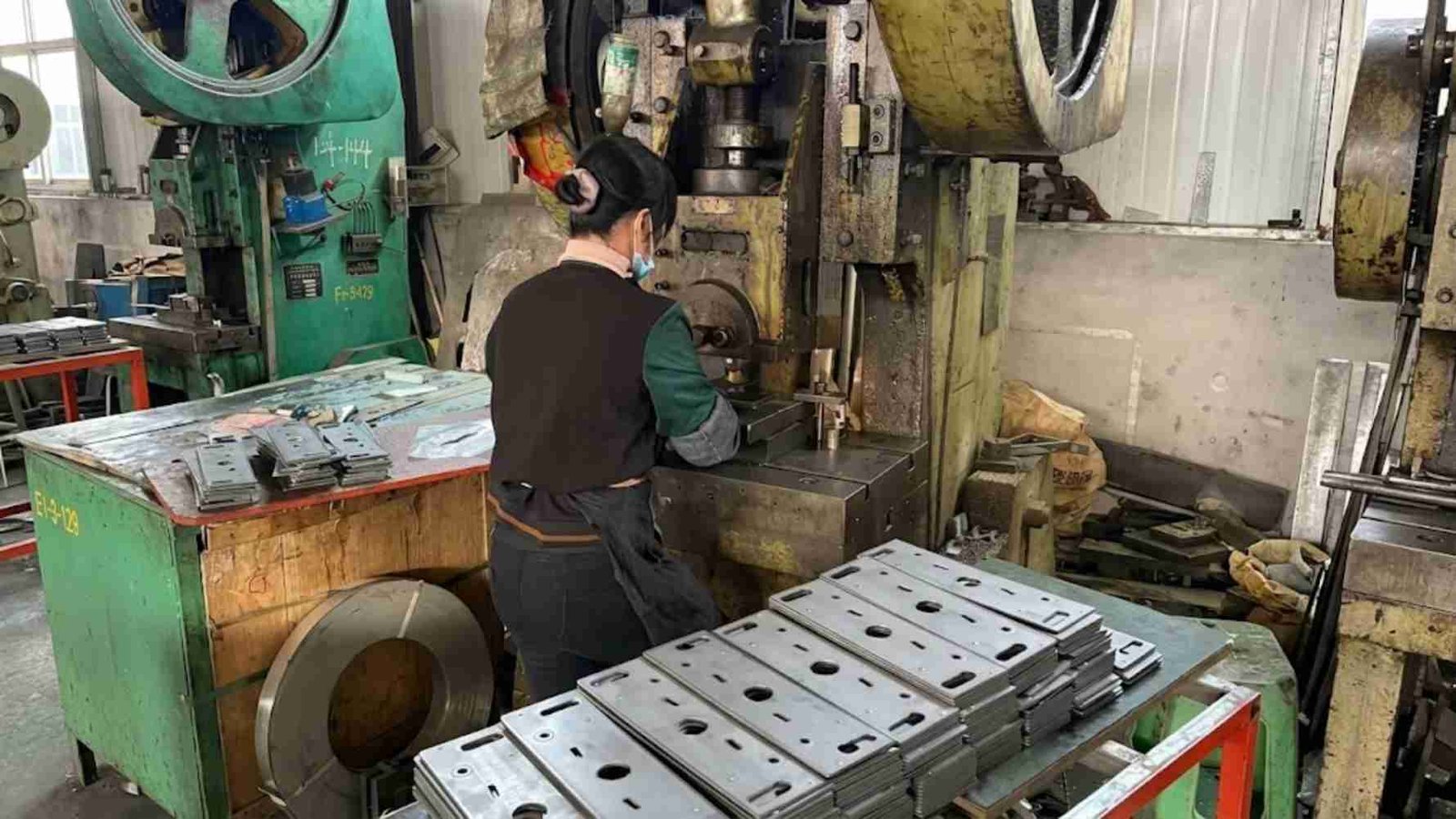
Masion: Stainless steel stamping and sheet metal manufacturing partner
Masion is a China-based sheet metal fabrication manufacturer founded in 2007 and based in Ningbo. It has a vertically integrated production process and can provide stainless steel stamping, as well as other production processes. The company has a large factory (more than 400 employees) and has the capacity to make more than 7 million sheet metal parts. Stamping and laser cutting, CNC punching, bending, robotic welding, riveting, assembly and surface finishing can all be done under one roof. This seamless solution ensures consistency and minimises supplier transfers and lead times. Masion also offers DFM services, prototyping, quality checking, and contract manufacturing services for custom jobs. It is used by the automotive, electronics, medical, robotics, energy, construction and industrial automation sectors. Send your drawings or specifications for DFM review and quotation.

Tips for getting the best results with stainless steel stamping
- Involve Manufacturers Early: Consult with your stamping manufacturer at the design stage. Their feedback can assist with tooling simplification, material waste and costly production changes.
- Select the Right Grade: Select the lowest cost stainless steel grade suitable for the operating environment. Before making your decision, think about the corrosion resistance, strength, temperature exposure, or forming requirements.
- Specify Suitable Bend Radii: Always use a bend radius at or equal to the material thickness. This minimises the potential for cracking and helps to ensure a uniform quality of parts in forming.
- Consider Springback: Stainless steel may tend to return to its original shape to some degree after forming. Consider springback when designing tools to obtain proper angles and dimensions.
- Finishing Requirements: Identify surface finishes, cleaning and passivation requirements before production. Having clear specifications ensures that the manufacturers can achieve the same appearance, corrosion resistance and performance in stamped components.
Conclusion
Stainless steel stamping is the process of creating durable, accurate, and corrosion-resistant components for various industries. But it relies on the selection of the appropriate grade, the design of appropriate tooling, the control of lubrication and the maintenance of strict quality standards to achieve success. Early involvement of the manufacturer helps to identify potential problems, minimise the amount of materials wasted and control the cost of the production process. From custom brackets to medical components or automotive parts, an experienced manufacturing partner can make all the difference. Speak to a stainless steel stamping expert, such as Masion, about your needs and design options, and get a quote.
FAQs
How durable are stainless steel stampings?
Under severe conditions, stainless steel stampings can provide excellent durability, tensile strength, wear resistance and structural integrity. The protective oxide layer of chromium helps to protect against corrosion. Grade 304 is used for general applications, and grade 316 is more resistant to chlorides. Cracking and failure due to stress are avoided through proper forming, lubrication and heat treatment.
What are the benefits of 304 stainless steel stamping?
Grade 304 stainless steel is a combination of excellent formability, corrosion resistance, strength and cost for wide-ranging applications. It contains 18-20% chromium and 8-11% nickel, which helps to prevent staining and oxidation. Masion is a manufacturer of custom stamped components for automotive, appliance, industrial and food-processing applications where the size and performance of the parts are critical.
What thickness works for stamping stainless steel?
The thickness of the stainless-steel sheet generally ranges from 0.3mm to 6.0mm in industrial stainless-steel stamping, depending on the requirements of the stamped parts. Thin sheets are good for complex electronics; medium thicknesses are for brackets and enclosures. Rigid structural elements are allowed in thicker materials. Thickness selection also depends on grade, work hardenability, press size and tool design.
Can stainless steel stamped parts be customized?
Yes, manufacturers customize stainless steel stamped parts based on the engineering drawings, sizes, thicknesses, grades and requirements for finishing. Options include 304, 316, 316L, and 430 stainless steel. In addition, Masion has the capability to combine laser cutting, CNC punching, bending, welding and assembly, to provide customized components with coordinated manufacturing processes.