Steel Stampings: A Guide to Materials, Presses and Design
Steel stampings are metal parts that are cut or formed from steel sheets and coils using precision-cutting tools and high pressure. Steel is a popular material used by manufacturers due to its strength, formability, durability and low cost. The knowledge of the stamping process will facilitate you to choose the appropriate materials, presses and manufacturing techniques. This guide will discuss common stamping operations, steel grades, hand stamping techniques, industrial applications, and key design considerations. It also discusses the role good tooling and finishing play in achieving part quality, dimensional accuracy, and production efficiency.
What is stamped steel?
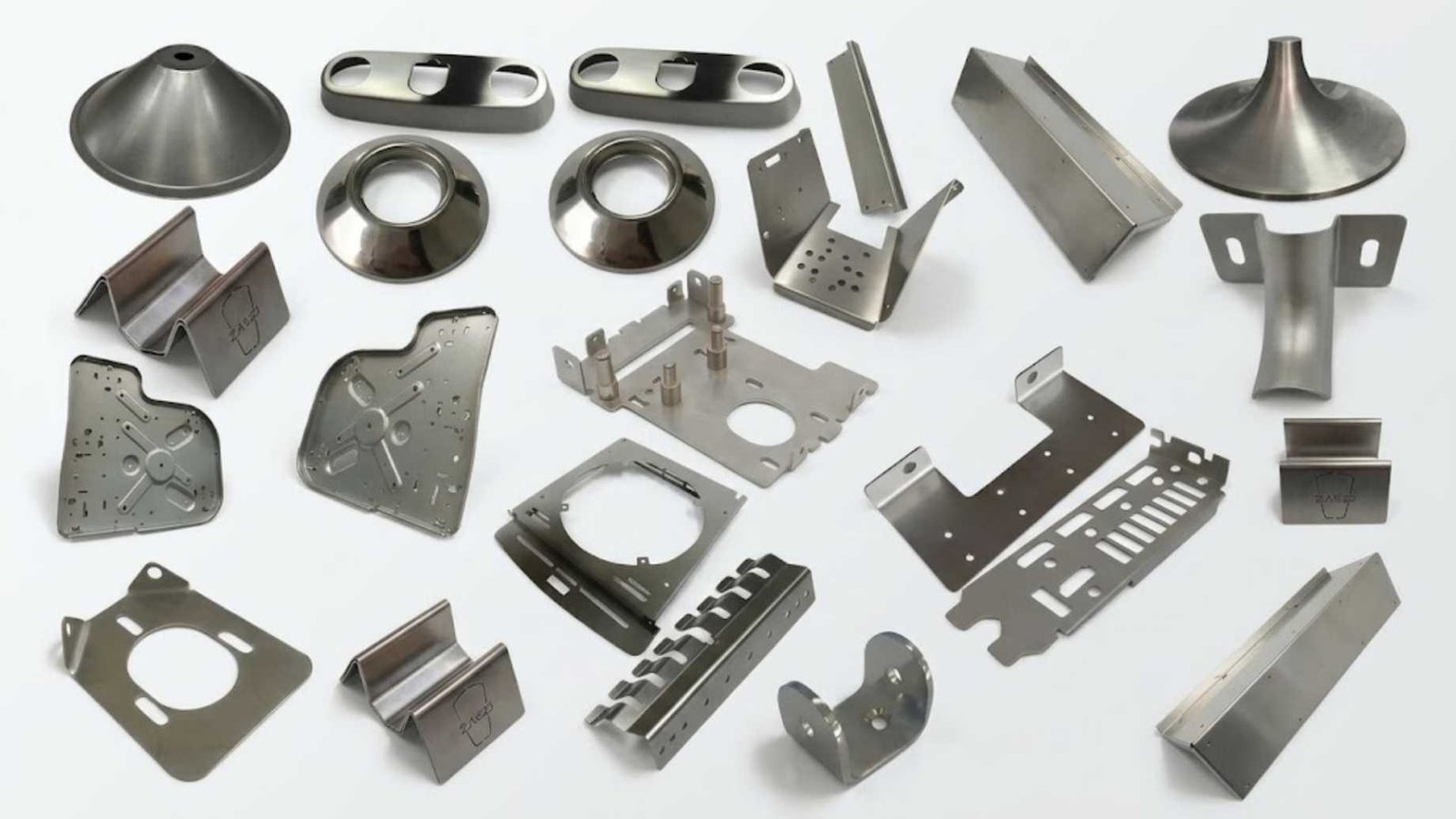
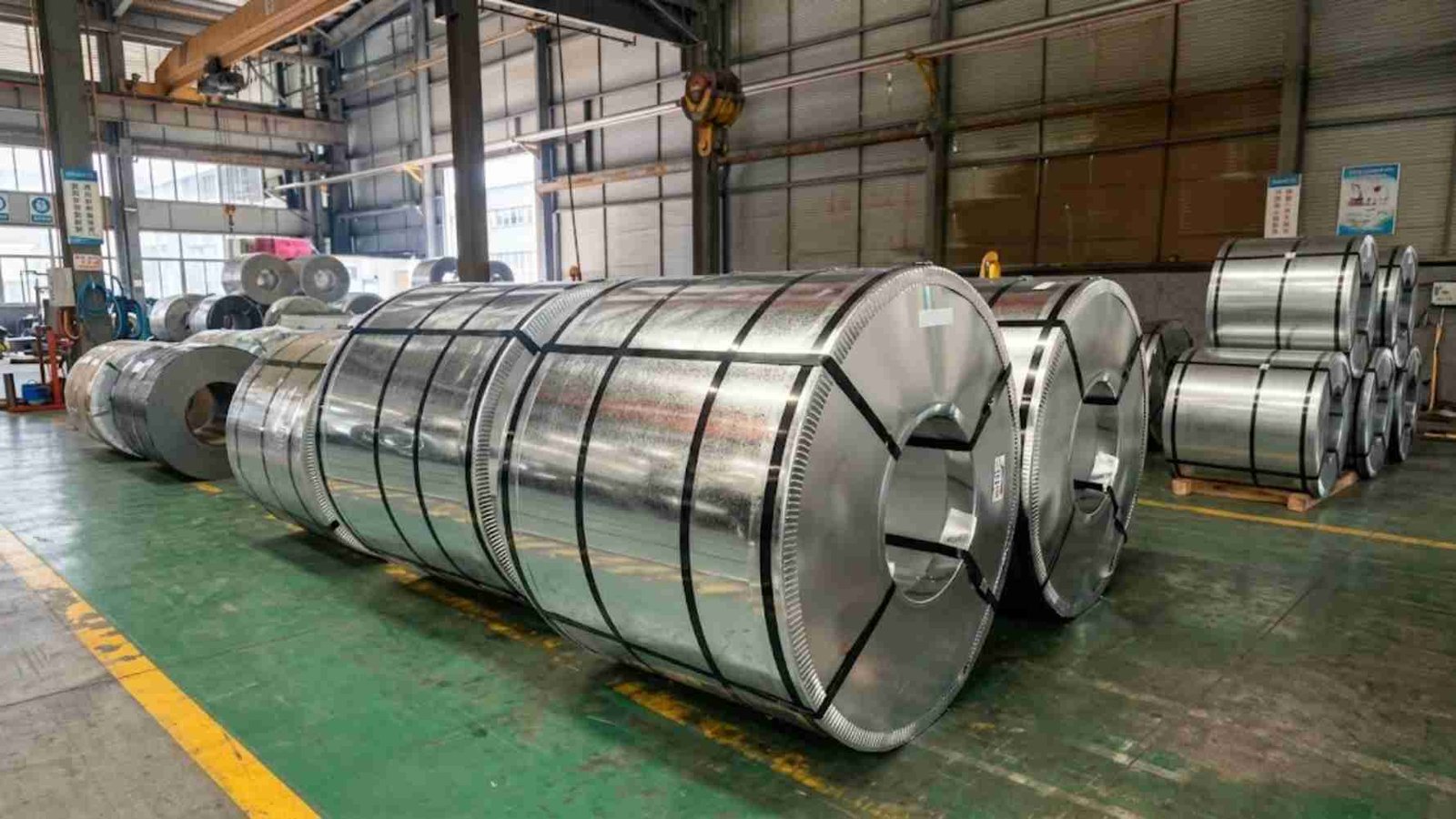
Steel sheet that is formed or cut in a press using a punch and die without material being removed via the machining process is called stamped steel. It begins with a flat sheet or coil and yields parts as small as clips to automotive brackets. Stamped steel parts can be produced faster than cast or machined parts, are repeatable and have lower per-part costs at higher quantities. By knowing stamped steel sheets, you will be able to consider manufacturing options. The word steel stamps can also describe hand tools that are used to mark metal.
How does the steel stamping process work?
Step 1: Part Design and Tooling Design
The first step in the steel stamping process is to design the component and then create the necessary dimension, shape and tolerance dies. One of the most important up-front investments is the tooling design, as precision directly relates to production consistency, efficiency, and repeatability.
Step 2: Material Selection and Preparation
Then, manufacturers choose the steel grade based on strength, thickness, corrosion resistance, formability and application needs. The steel is delivered in coils or sheets, inspected and prepared prior to being put into the stamping press.
Step 3: Feeding Steel into the Press
Steel sheets or coils, which have been prepared, are fed into the stamping press by hand or by an automatic loading machine. Proper alignment and feeding control ensure dimensional consistency, minimise material waste, and avoid defects in subsequent processes.
Step 4: Press Stroke and Forming
Each time the press presses, the punch exerts pressure on the steel in conjunction with the die, which cuts or shapes the steel. Operations such as blanking, piercing, bending, and drawing are performed on the pieces to form the desired geometry of the component, depending on the design of the tools.
Step 5: Part Ejection and Secondary Operations
Once formed, finished components are ejected from the die and subjected to the required secondary processes. These can involve deburring, heat treatment, plating, or other finishing operations that enhance the quality of the edges, mechanical properties and corrosion resistance.
Step 6: Quality Inspection and Stamping Methods
Stamped parts are checked by the manufacturer for dimensional accuracy, surface defects and specifications. Single-stage dies are used for single operations, progressive dies are used for high-volume production, and transfer dies are used for larger or deeper-drawn parts and are used in sequential forming stations.
Common steel stamping operations
Blanking
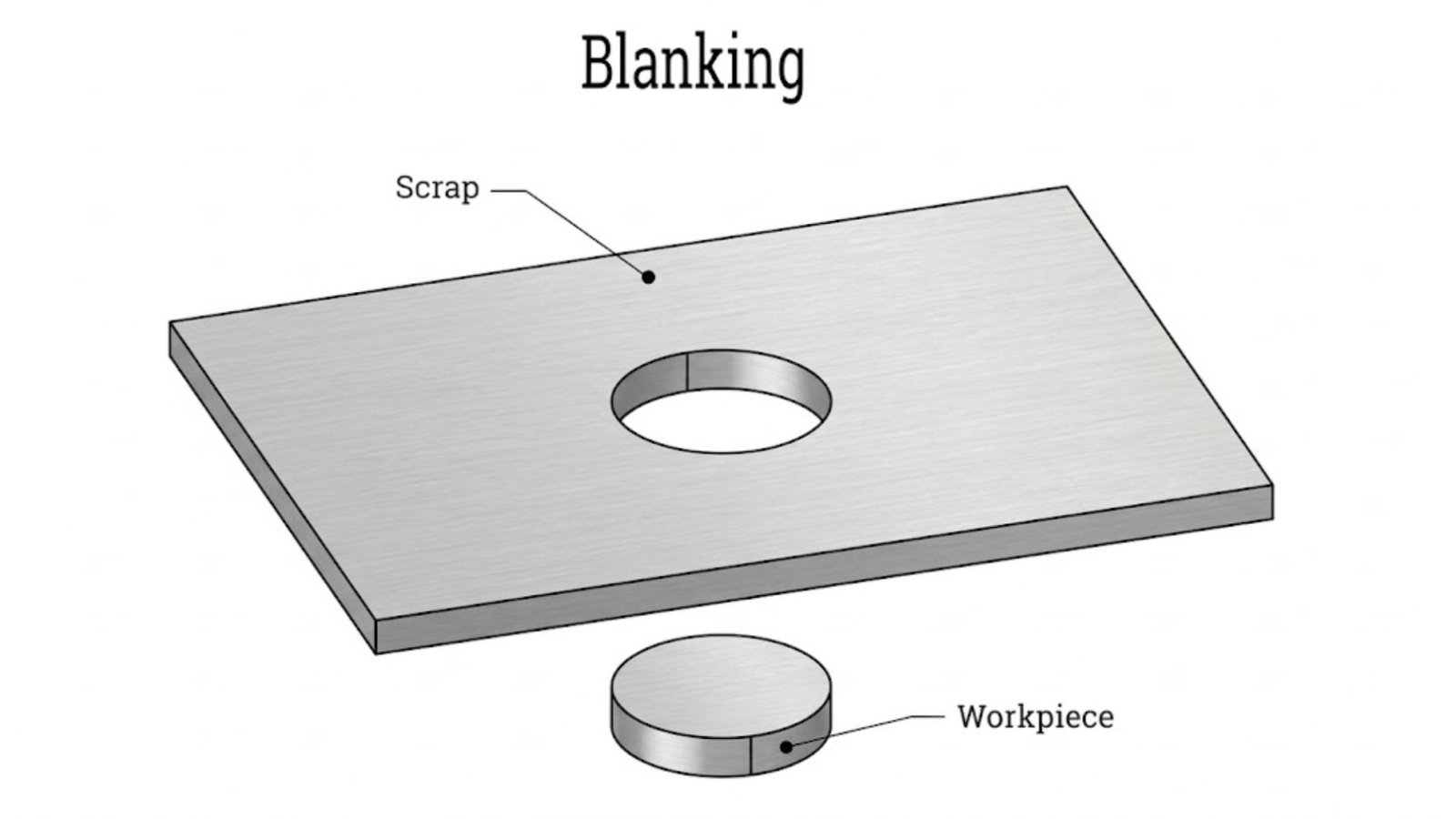
Blanking is a process of cutting out the necessary flat outline shape from the steel plate with the stamping die and press. The separated piece will be the actual part or a blank for further manufacturing processes, like forming brackets.
Piercing/Punching
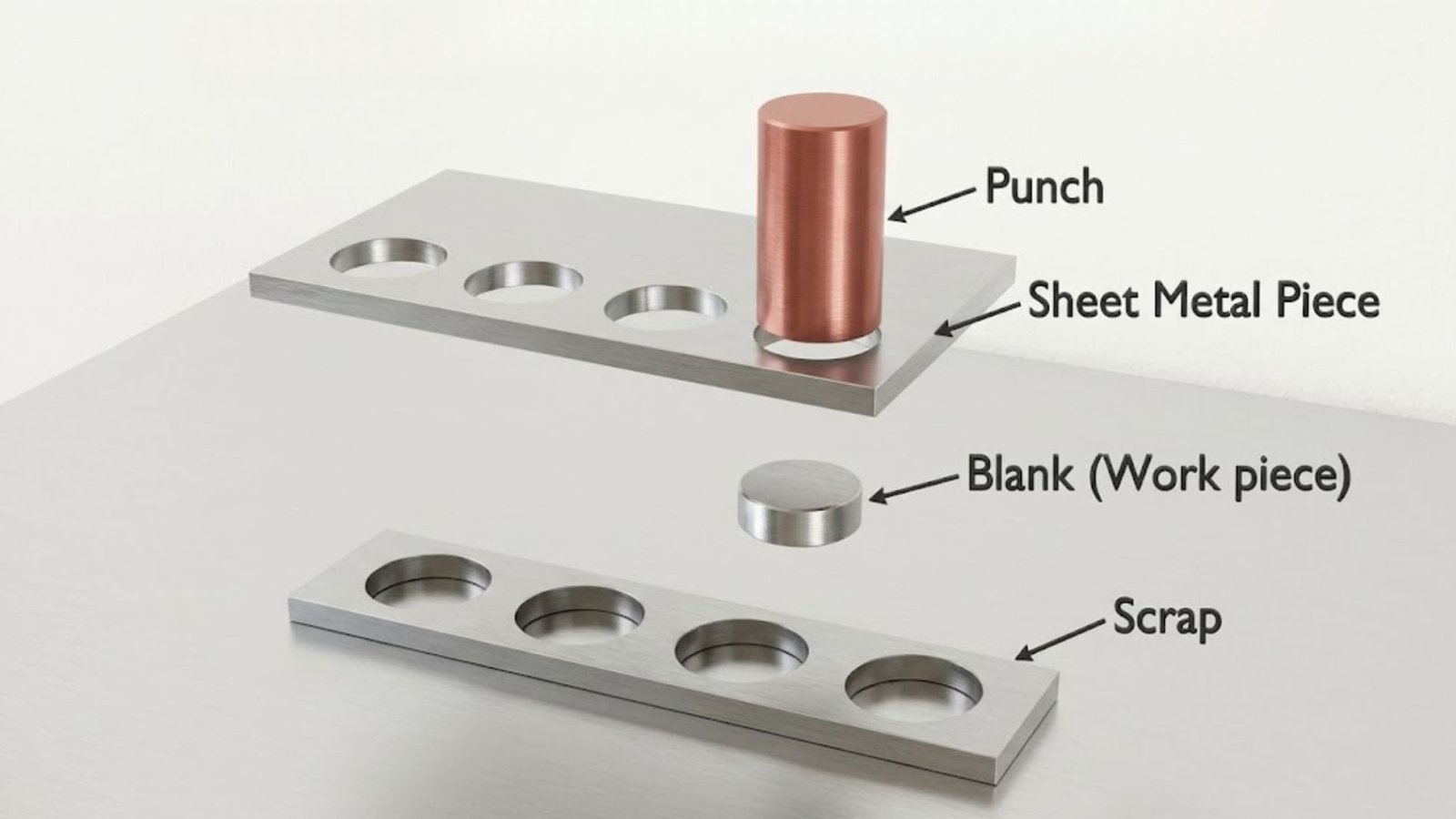
Piercing or punching is the process of opening holes, slots and other openings in steel sheets by punch and die. This process is often employed by manufacturers to create mounting holes in brackets, panels, and structural elements.
Bending
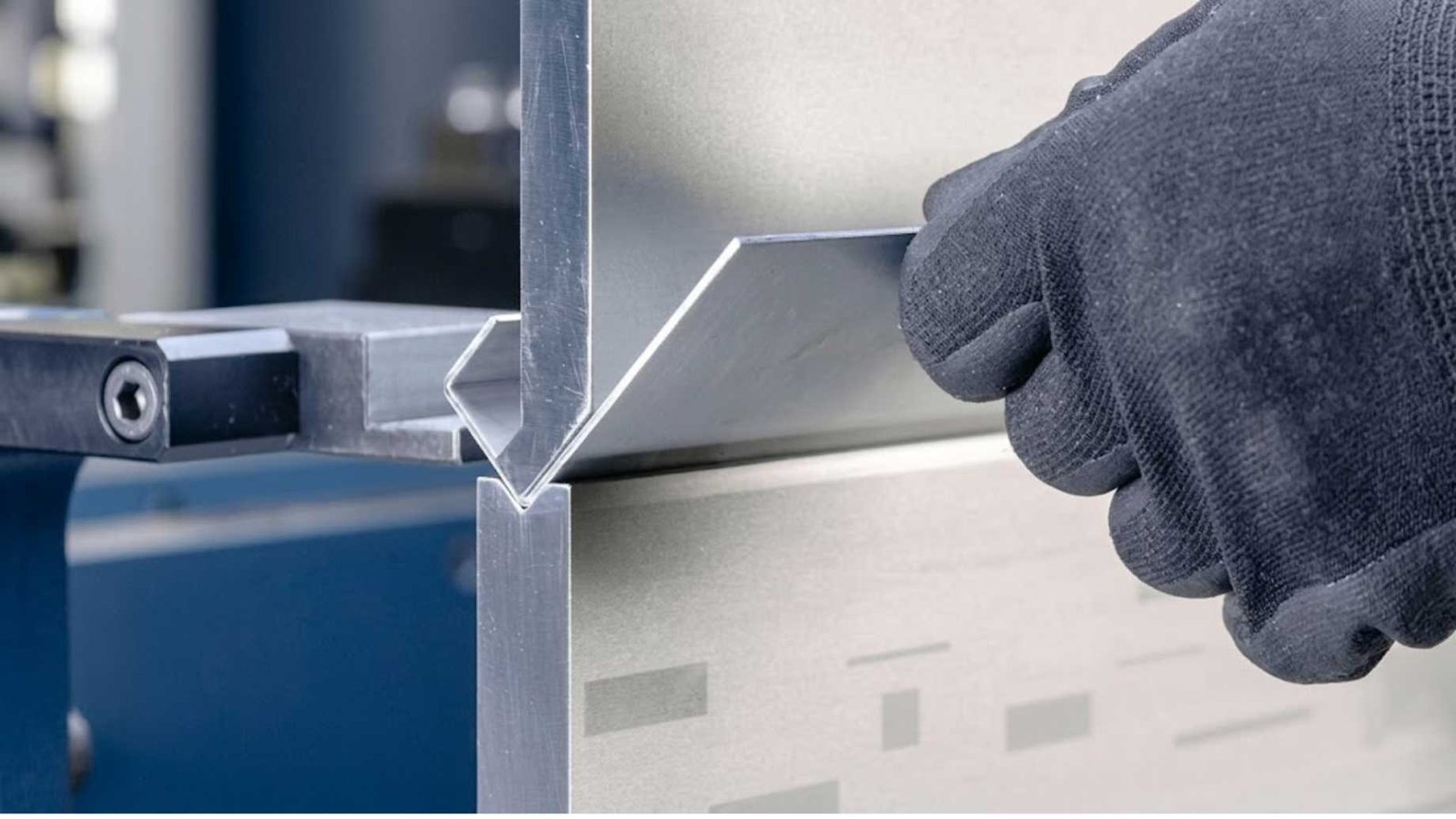
Bending is the process of forming steel sheets into a desired angle or flange along a straight line without parting the material. Typically, these operations yield L-shaped brackets, mounting supports, enclosures, etc., that must be square and of uniform size.
Forming and Drawing
Forming and drawing processes are used to shape 3D parts from flat steel blanks under the action of pressure and material flow. Common examples are cups, trays, and housings, where drawing involves pulling the sheet metal into a die cavity.
Coining
Coining is using high pressure to crush steel in a specific area to create fine detail, tight tolerances, and/or well-defined surface features. This is the process that manufacturers employ for precision parts that need fine details or embossed details.
Embossing
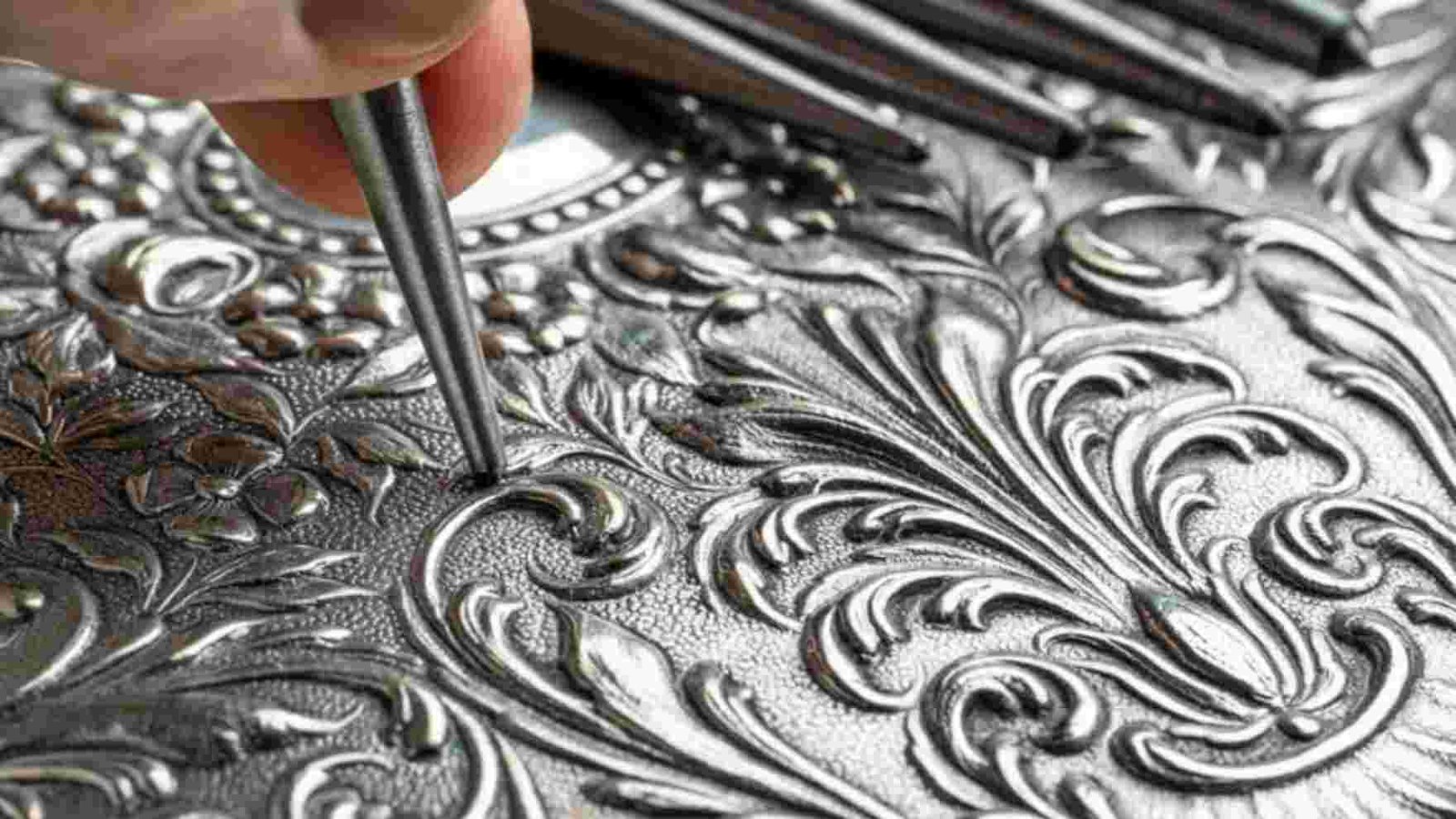
Embossing is a technique that does not cut into the steel, but rather forms a raised or recessed pattern on the surface. It is usually performed by manufacturers to provide logos, identification marks, decorative textures or reinforcing features on stamped parts.
Flanging
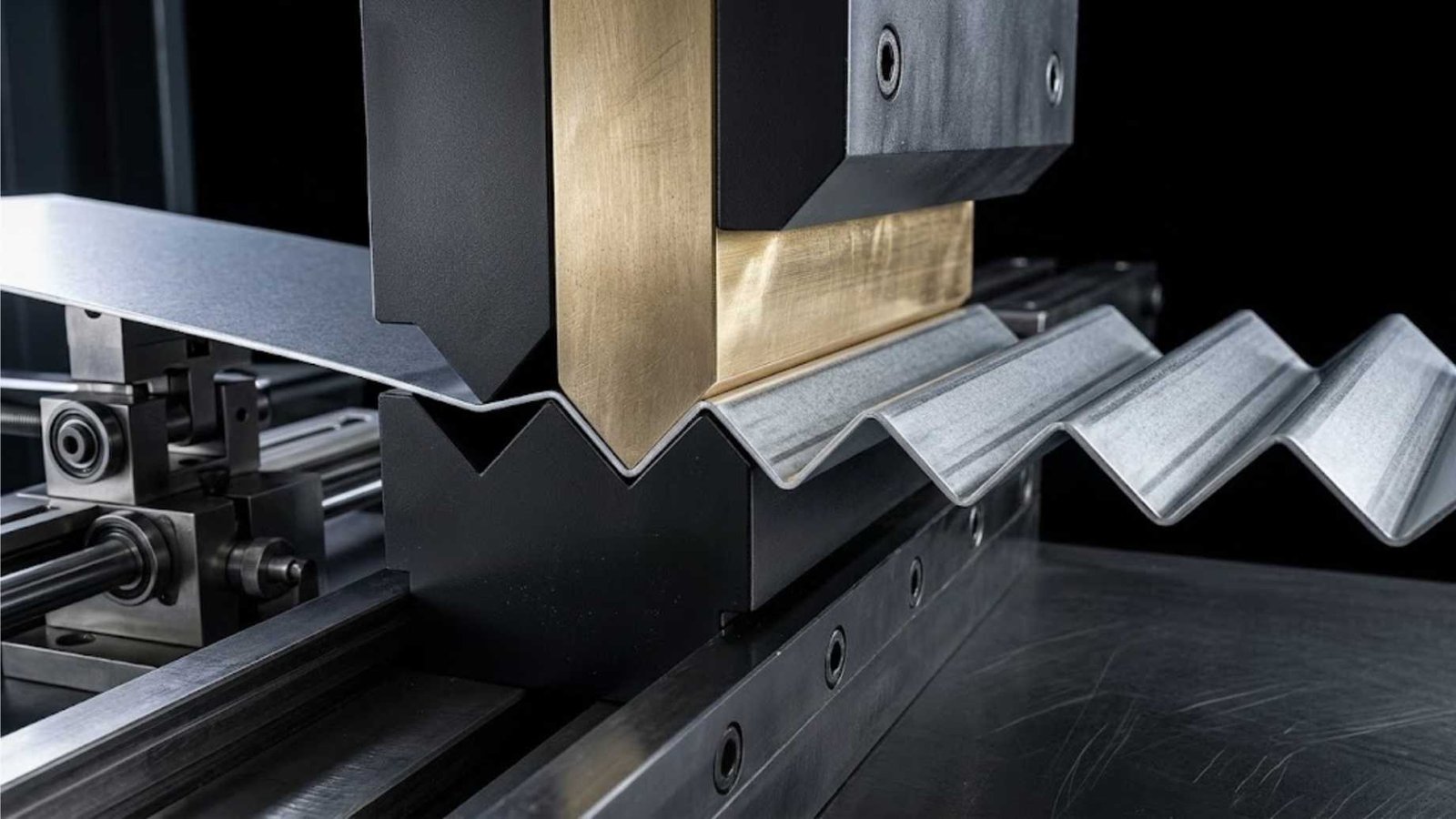
Flanging is a process in which a steel sheet is bent to form a projecting rim or flange, which is beneficial for certain applications. This feature can be used to enhance edges, align components, or create surfaces for fastening, joining, and assembly.
The majority of steel stamping products are a combination of several operations, especially in progressive dies, where multiple stations of the die complete various manufacturing tasks automatically.
Steel stamping press types and tonnage
A steel stamping press is used to press or cut steel sheets into parts or shapes. Selecting the appropriate press enables you to balance the production speed, forming requirements and manufacturing costs.
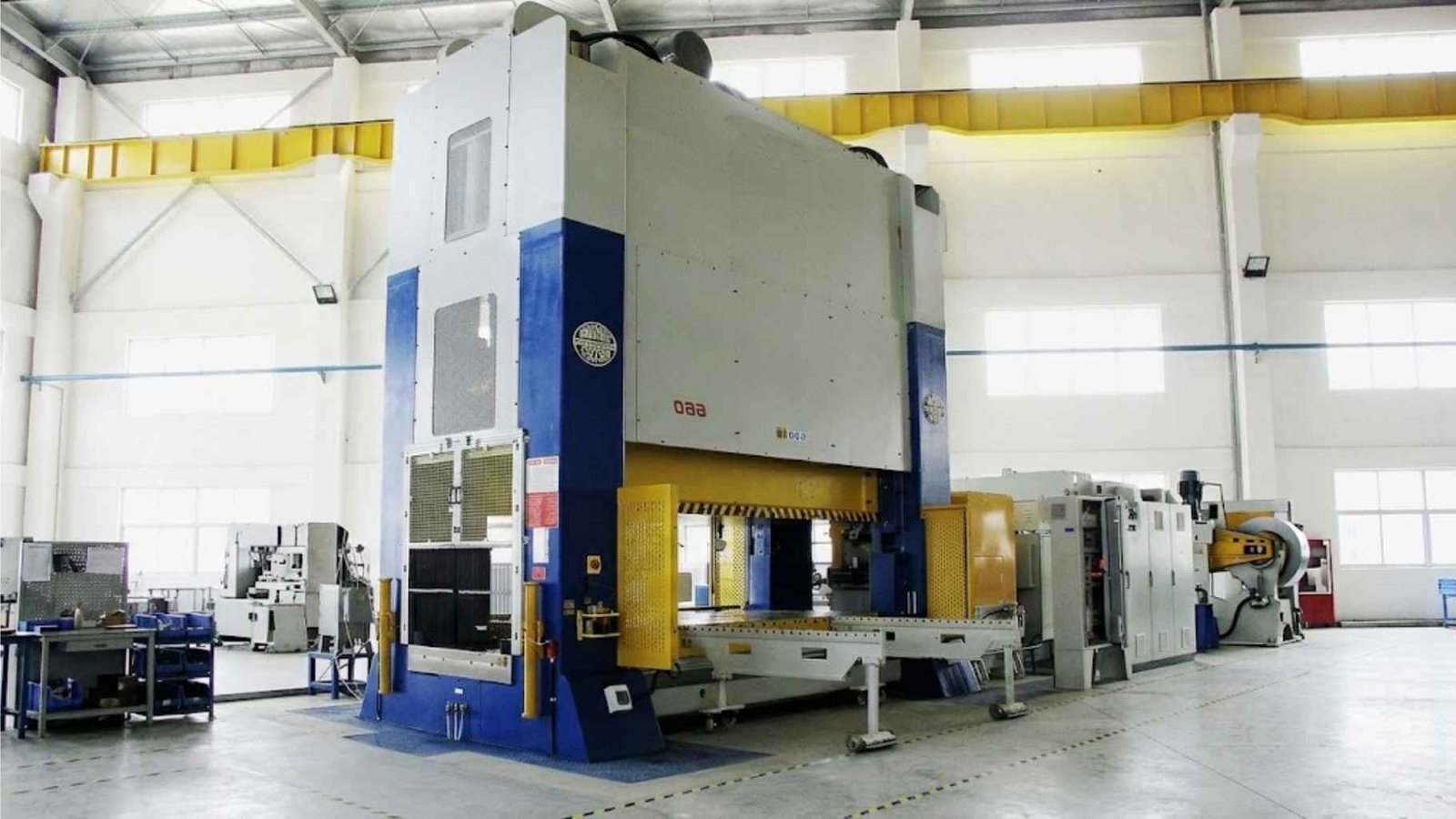
- Mechanical presses: These presses have a high operating speed and are applicable to blanking and shallow forming with a large quantity of products.
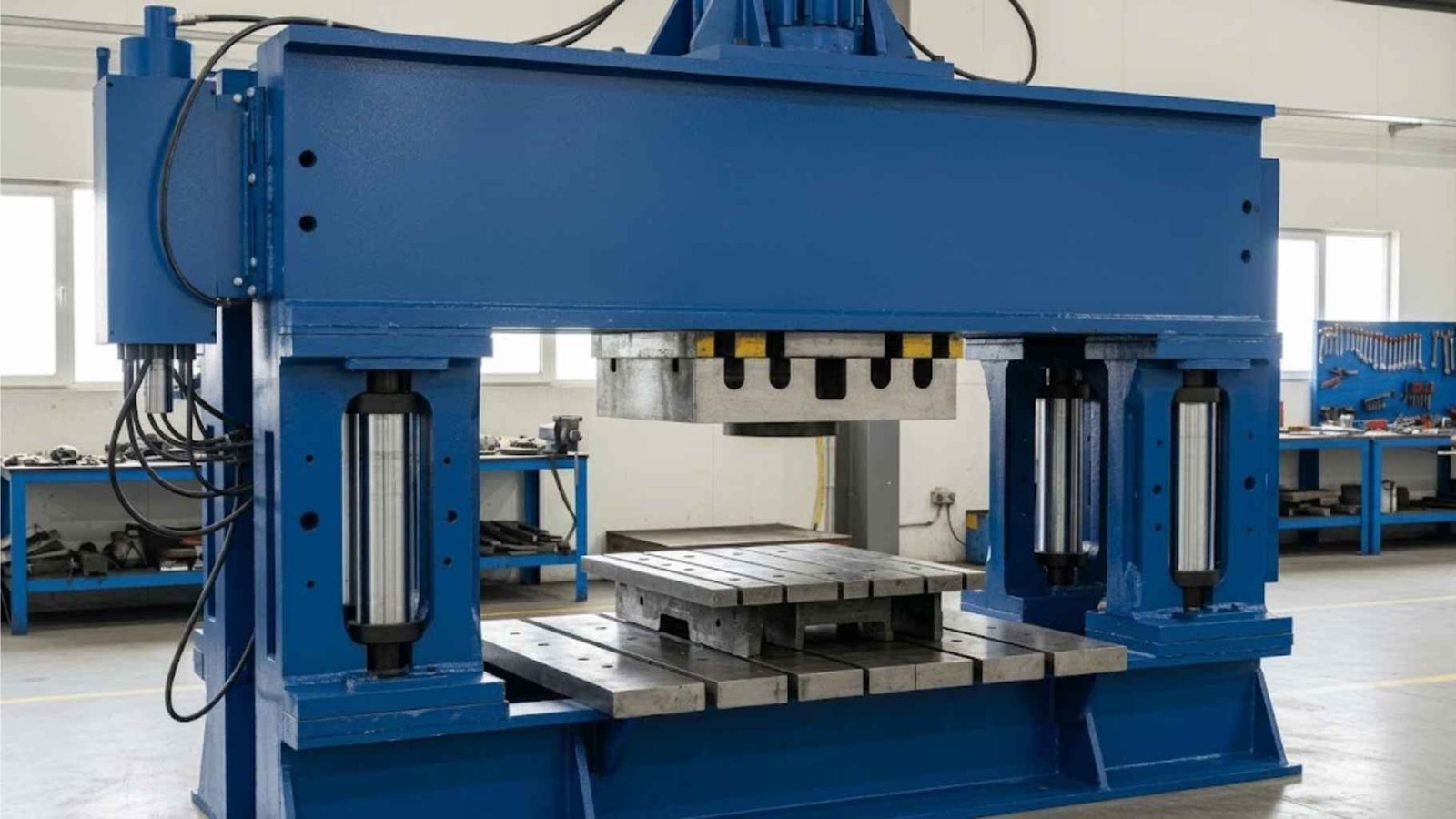
- Hydraulic presses: They are capable of delivering a controlled force and stroke, and are best suited for deep drawing and thicker materials.
- Servo-driven presses: These presses have a greater degree of flexibility, but are more expensive and have programmable motion and precise control.
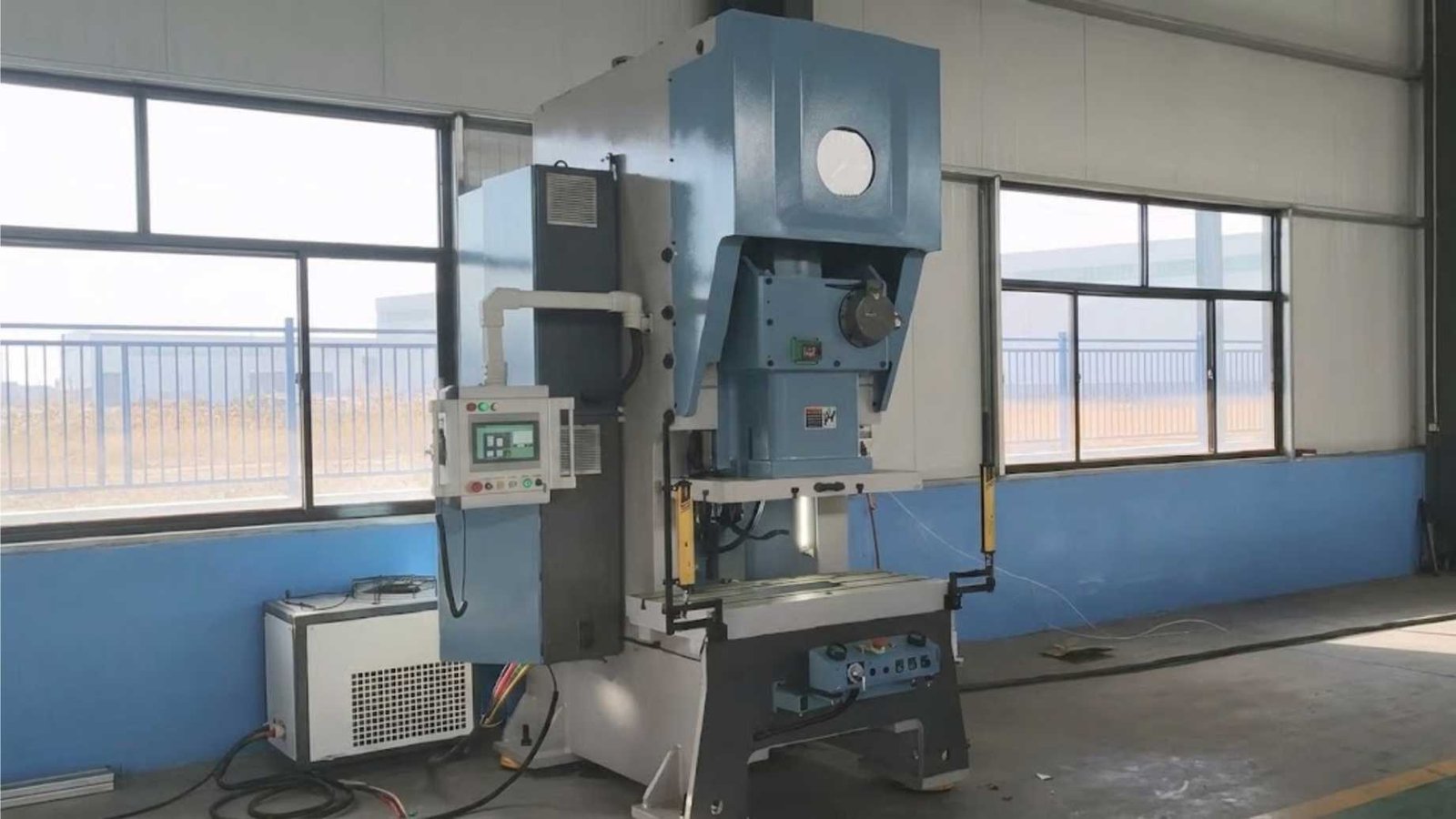
Press tonnage is dependent on the thickness of the material, tensile strength of the material, perimeter of the part, and the stamping operation. Typical industrial press sizes are from 25 to 500 tons, but larger sizes can be used for tough applications.
Types of steel used for stamped steel parts
There are a variety of different steel grades, each with its own level of strength, formability, corrosion resistance and price. The selection of appropriate steel thus depends on the use of the stamped parts, the production method and the working conditions.
1. Hot-Rolled Steel (ASTM A36): Hot-rolled steel is more economical and has a more rugged surface. It is suitable for stamped parts, support and structural brackets where appearance is not the primary concern.
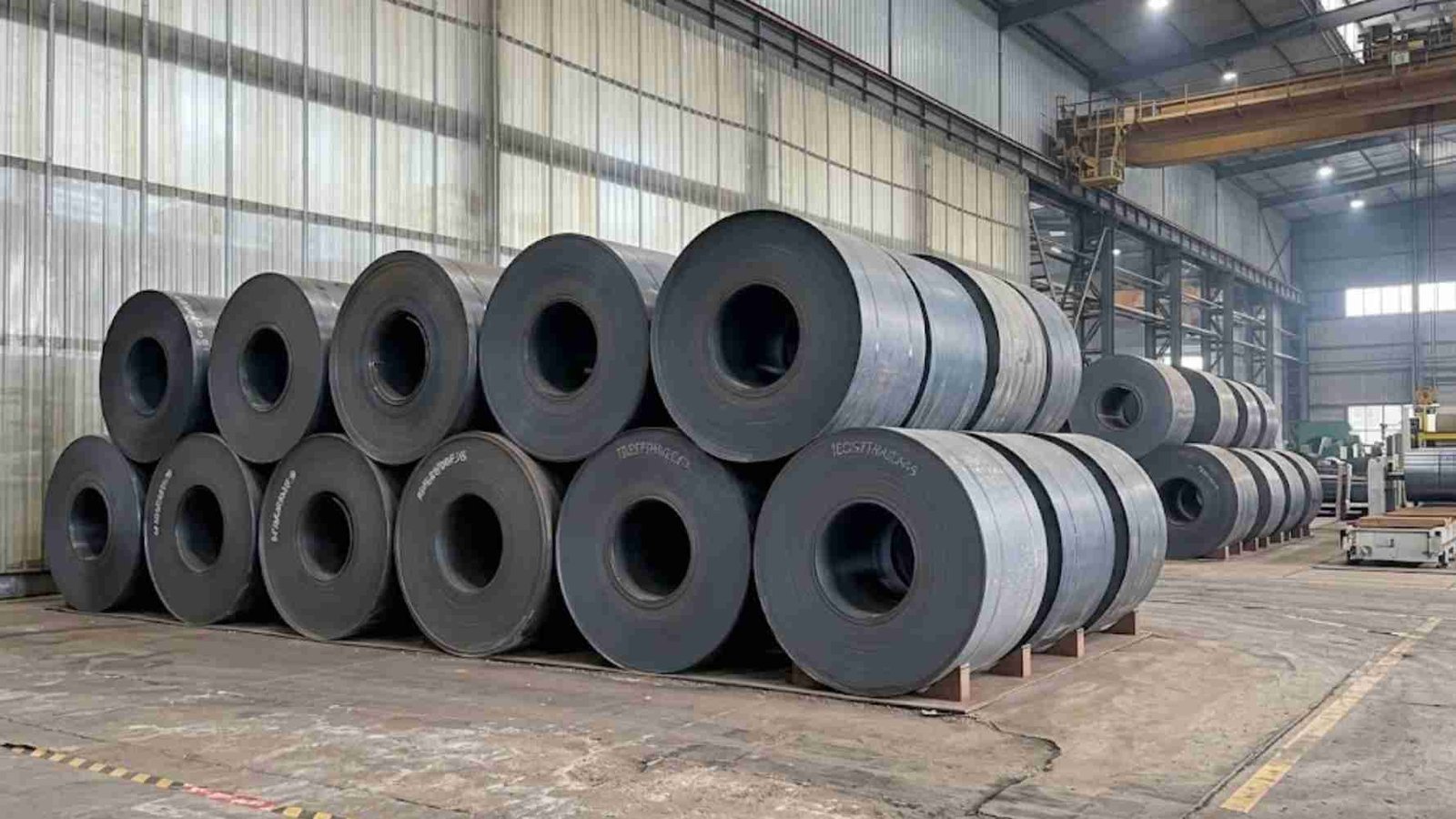
2. Cold-Rolled Steel (1008/1010): Cold-rolled steel offers smoother surfaces, consistent thickness and better dimensional control. It is suitable for automotive panels, appliance parts and precision stampings.
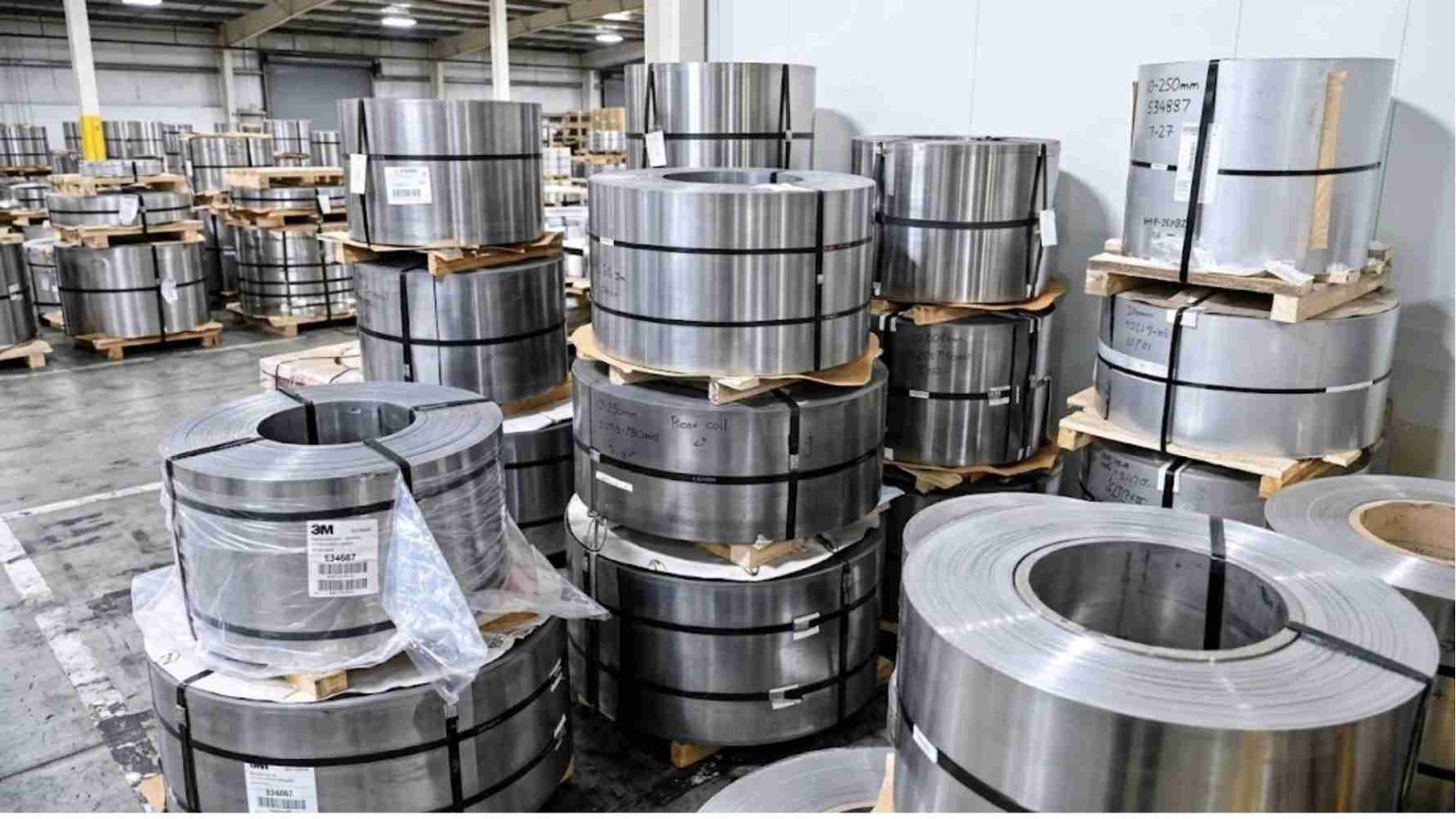
3. Low-Carbon Steel (1008/1010): Low-carbon steel has higher ductility, is easy to form and is fairly weldable. It is suitable for brackets, housings and complicated stamped parts, but protection against corrosion is required.
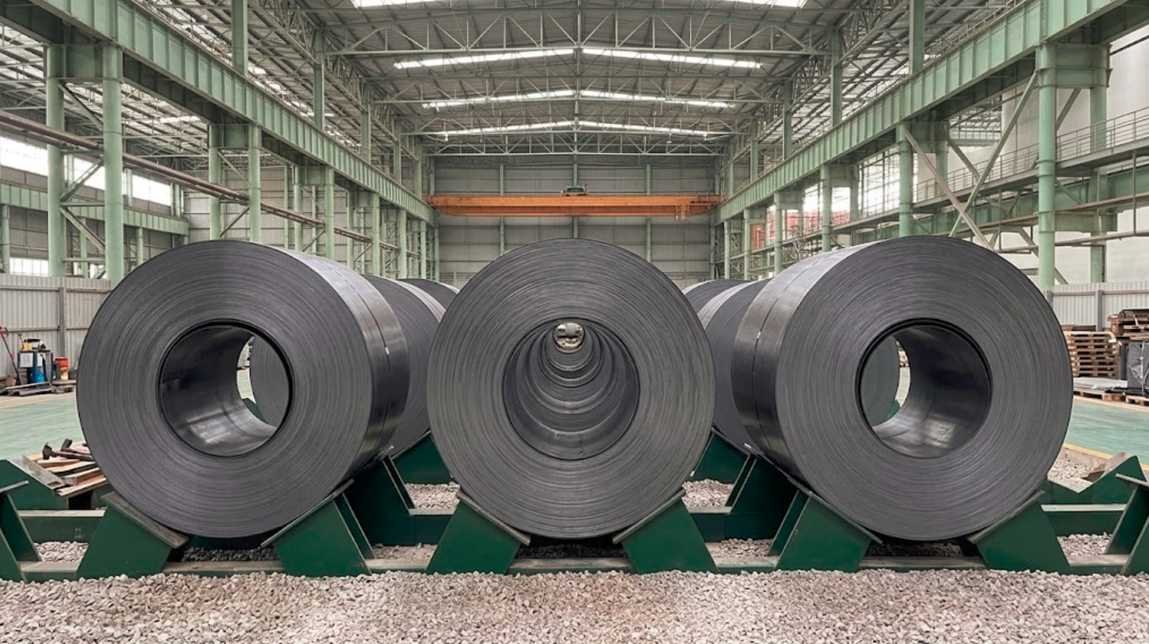
4. Medium-Carbon Steel (1050): Medium-carbon steels offer improved strength and wear resistance compared to low-carbon steels. It is suitable for mechanical parts that need to be durable, but it is more difficult to form.
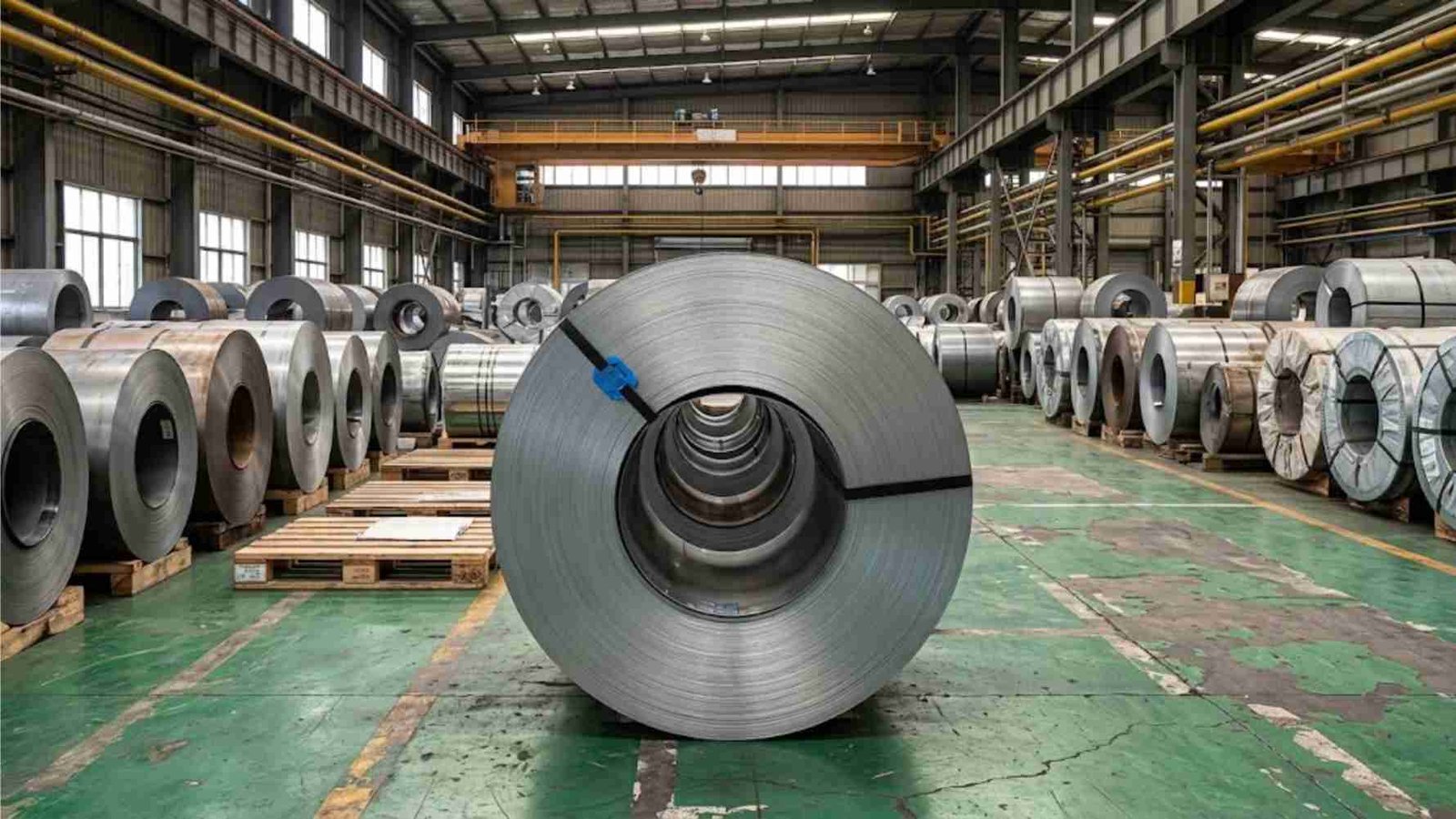
5. High-carbon Steel (1095): High-carbon steel is a high-hardness and high-strength material that can be obtained through proper heat treatment. It is appropriate for cutting parts, blades, wear parts and other parts that need to be reduced in ductility.
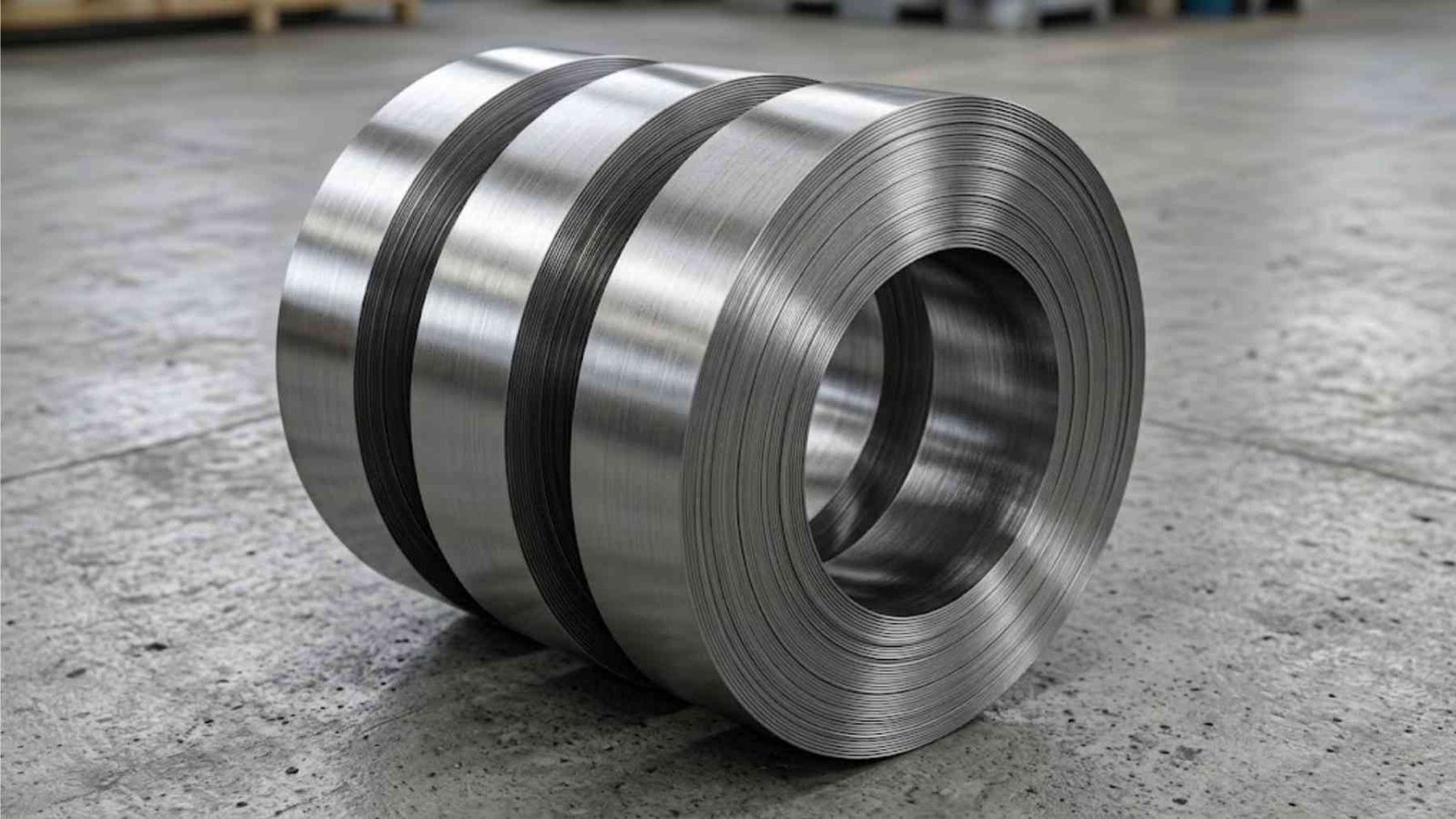
6. High-Strength Low-Alloy Steel (HSLA): These are grades like ASTM A572 that offer high strength while reducing the weight of components. They are suitable for automotive reinforcements, structural brackets, and load-bearing stampings.
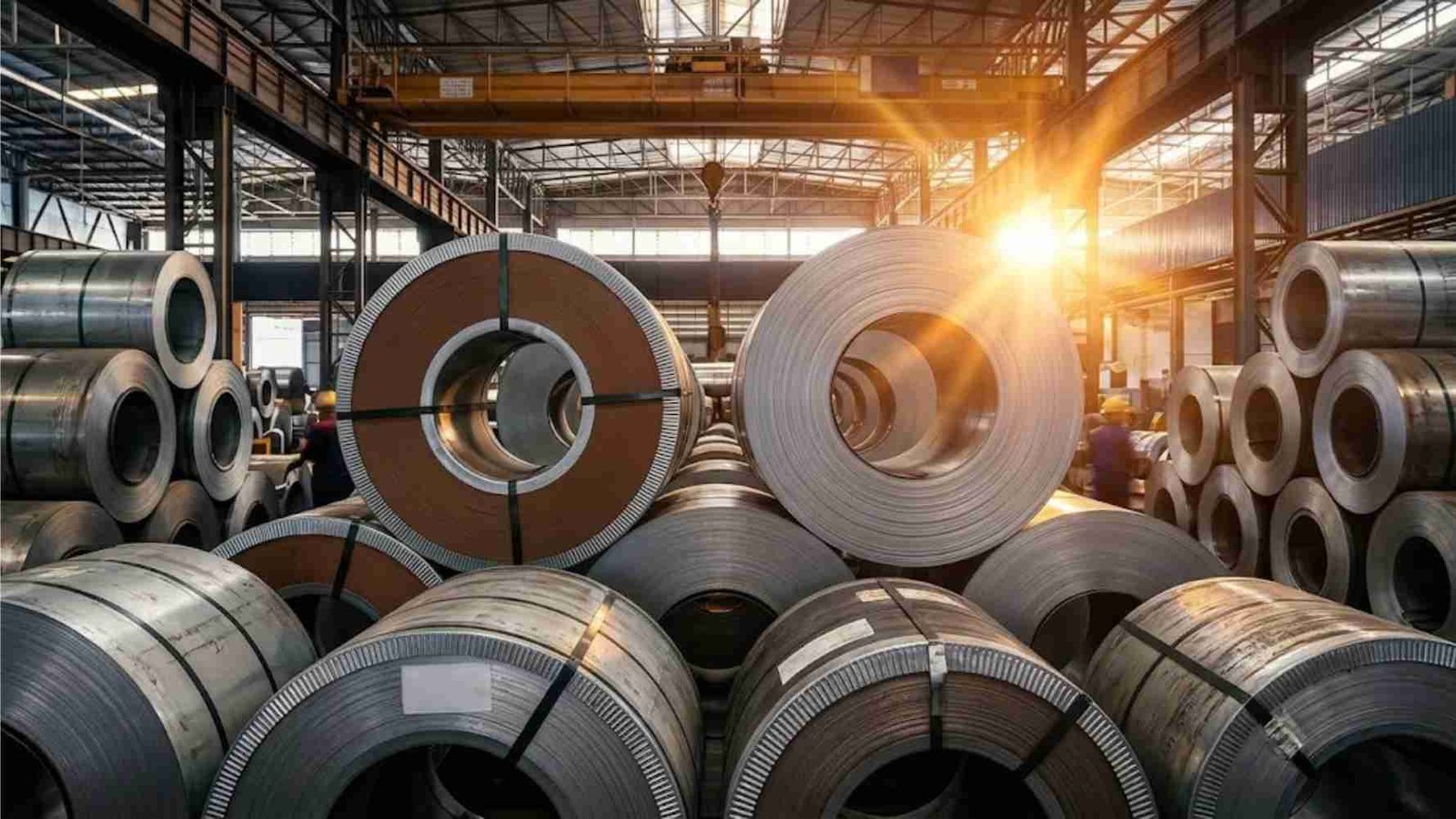
7. Spring Steel (5160): 5160 is a strong, fatigue-resistant spring steel that can be heat-treated to provide good spring qualities. It is usually stamped in the annealed condition and then hardened.
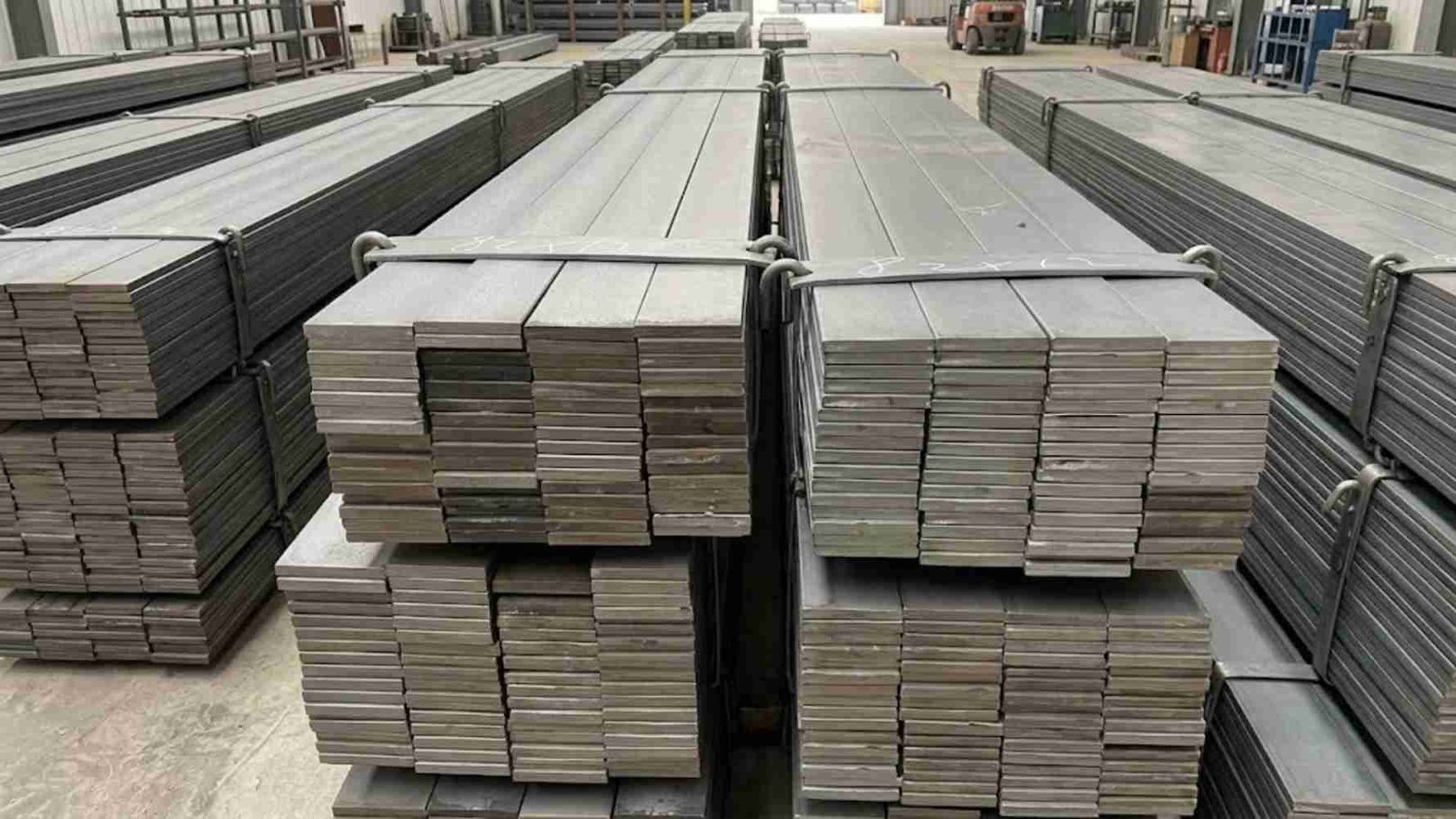
8. Galvanized Steel (ASTM A653): Galvanized steel is coated with zinc, which helps to resist rust. It can be used in automotive panels, enclosures, and outside components, but steel is still heavier than aluminum.
Steel stamps for metal: Hand stamping and custom steel stamps
Steel stamps are hard hand tools used to create an imprint on metal surfaces, whether it is a letter, a number or a logo. They are different from industrial press stamping because they are manually stamped permanent markings. With proper techniques, clear impressions are assured, safe handling and longer tool life are guaranteed.
How to Stamp Steel by Hand
Use a solid steel bench block to hold the workpiece in place so it doesn’t move. Use guide lines for consistent letter spacing and alignment. For steel, hold metal stamps perpendicular to the surface and strike hard with even blows. A 1 ½-2 lb ball-peen hammer is generally sufficient. Inspect impression depth, clean surface, apply rust protection as necessary. Eye protection is required due to mushrooming and chipping of stamp heads. Make use of stamping tools harder than the workpiece. Heavier blows or specially hardened stamps are necessary for harder steels and stainless steel.
Custom Steel Stamps
Custom steel stamps are used to imprint logos, serial numbers, and branding marks onto metal parts. They are composed of hardened tool steel and provide part identification and traceability during manufacturing. Businesses may choose designs to match their marking needs. Laser marking, dot-peen marking, and coining are other marking techniques that can be used as alternatives for automated or high-volume applications. The choice of the technique depends on the hardness of the material to be marked, the depth of the mark and the desired durability.
Applications of steel stampings across industries
Steel stampings provide a valuable foundation for manufacturing across industries, creating durable, accurate and consistent metal components. They are used in various applications based on their strength, thickness, shape and performance.
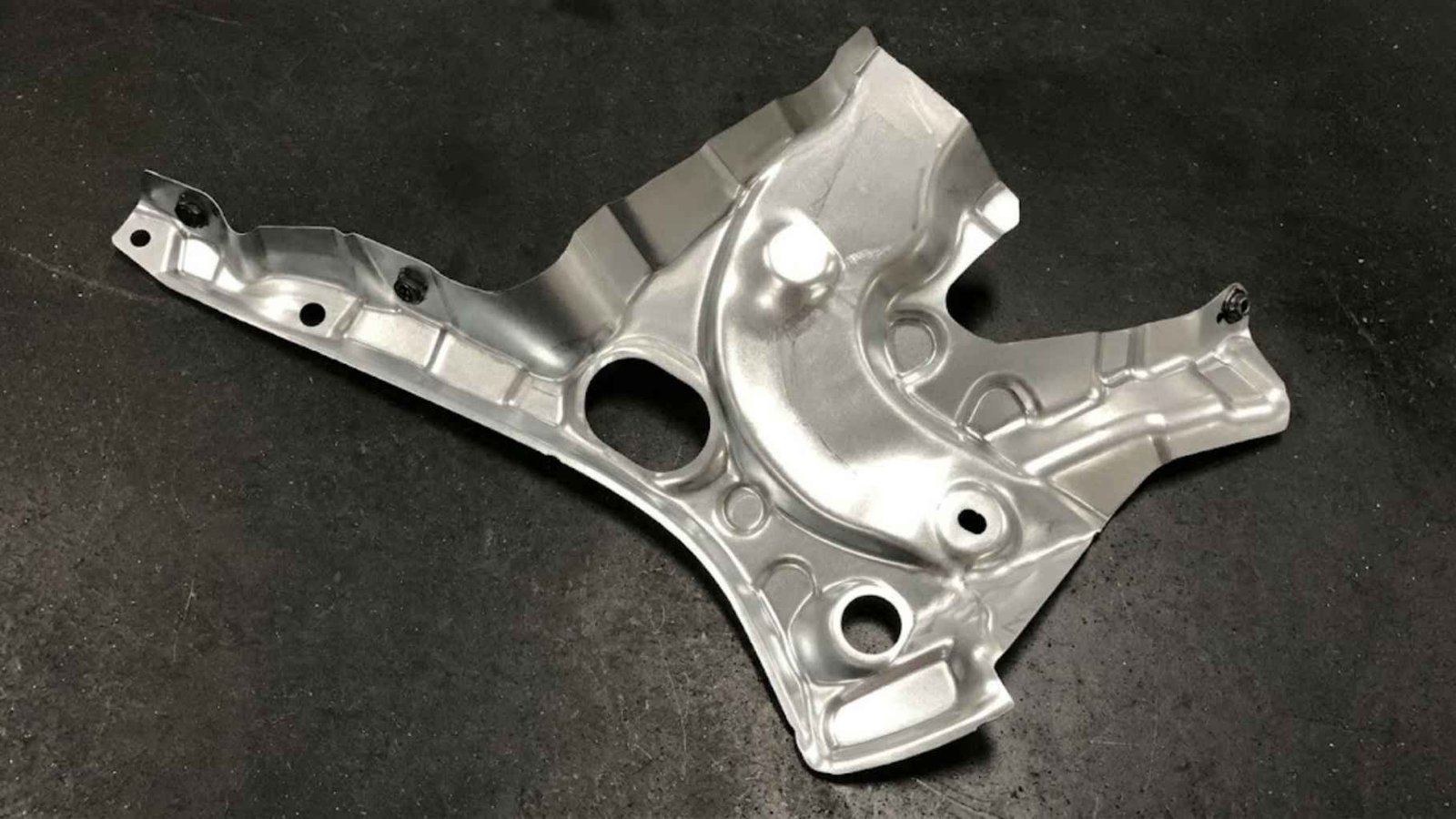
- Automotive: Steel stampings are used by manufacturers for brackets, chassis parts, exhaust components and transmission parts. These are all components which help to maintain the integrity of the structure and the reliability of the vehicle.
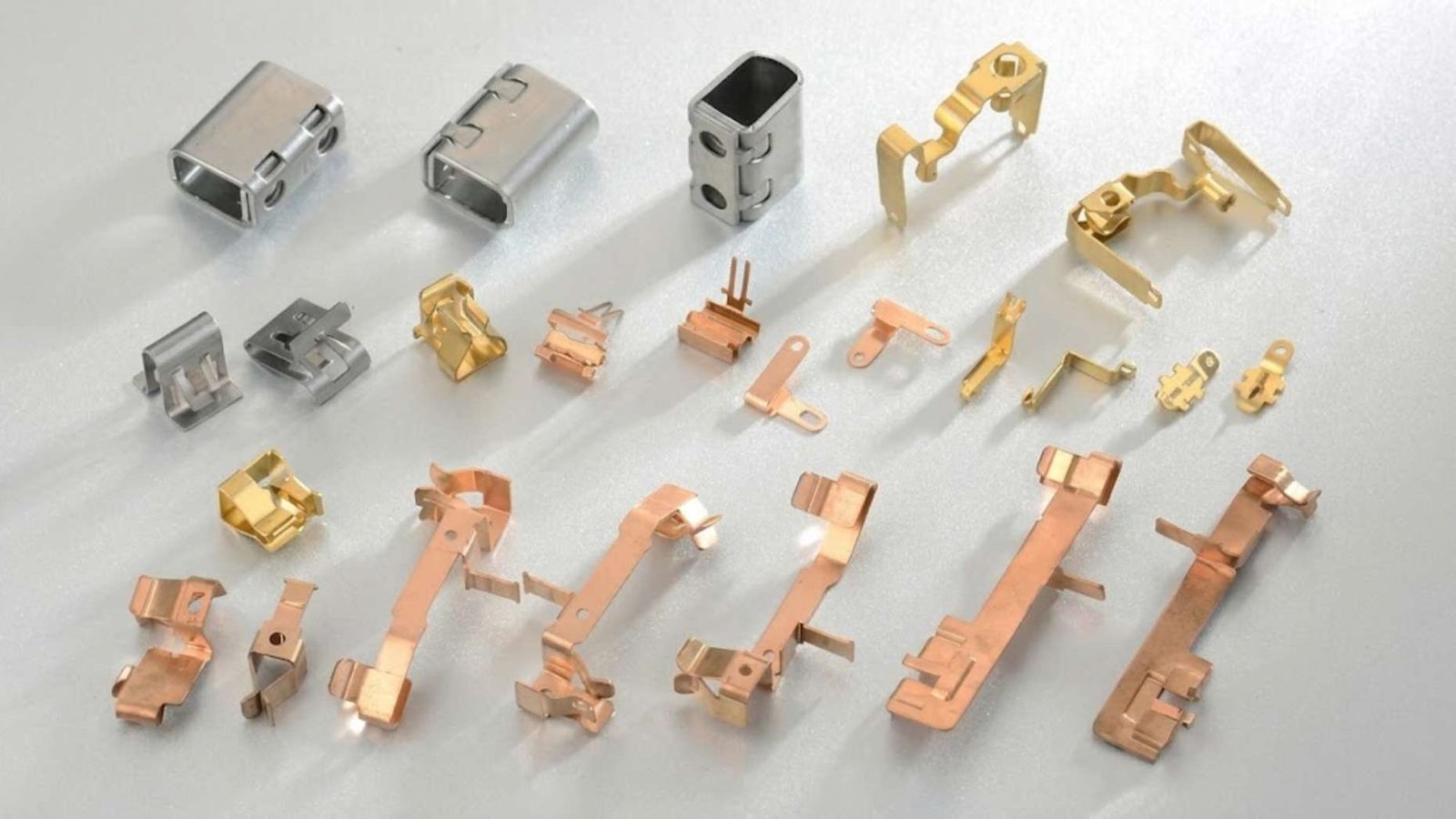
- Electronics: Stamped steel parts are used for enclosures, electromagnetic shielding and connectors. They provide protection for sensitive components and, at the same time, are compact in size and have a uniform assembly process.
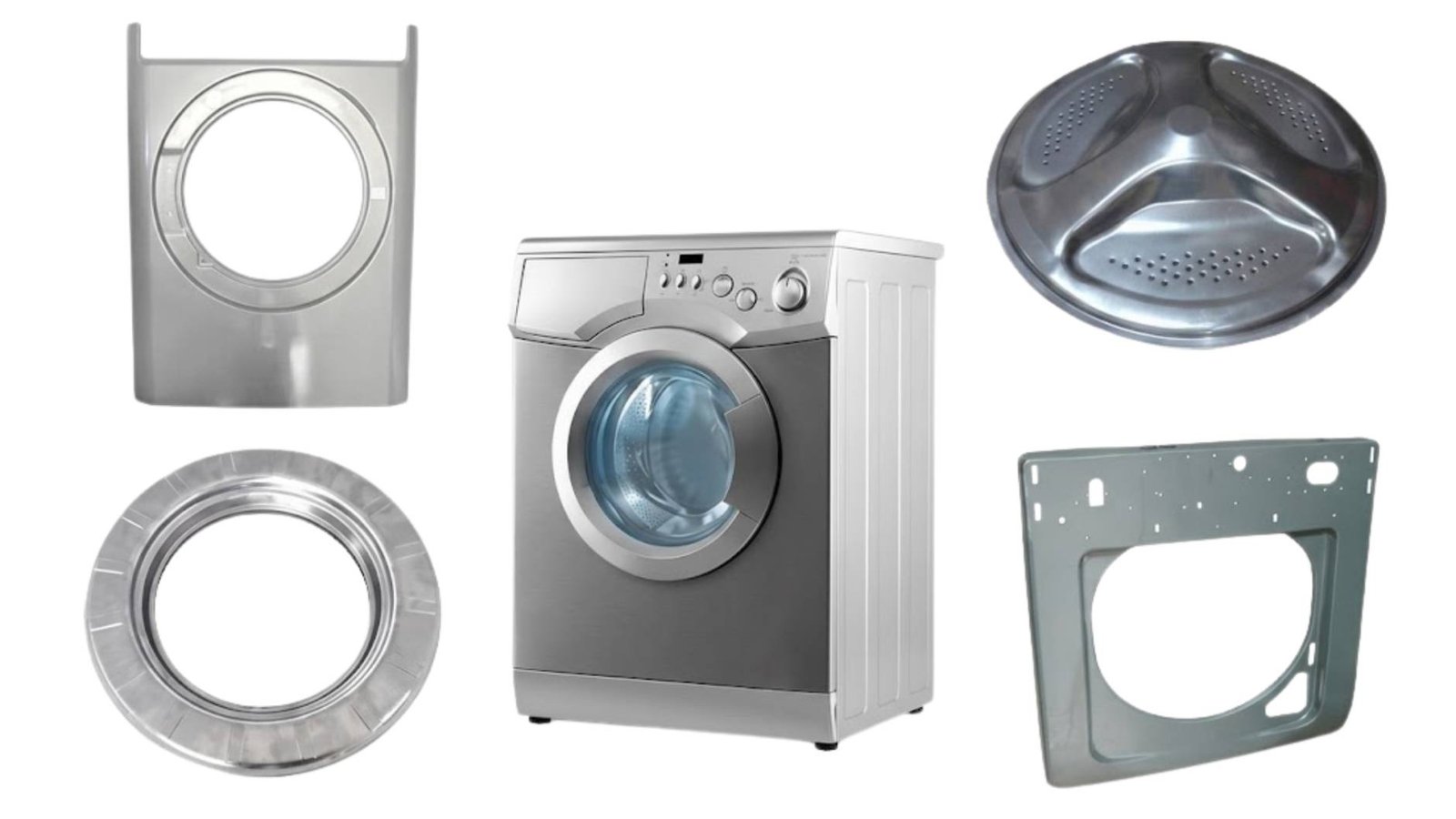
- Appliances: Stamped panels and internal structural components are found in washing machines, refrigerators and ovens. These components provide rigidity, support and accurate fits during assembly.
- Construction and HVAC sectors: Steel stampings are utilized to manufacture structural components, mounting brackets, duct fittings and fasteners. They are strong enough to hold equipment in place and ensure reliable operation in harsh operating environments.
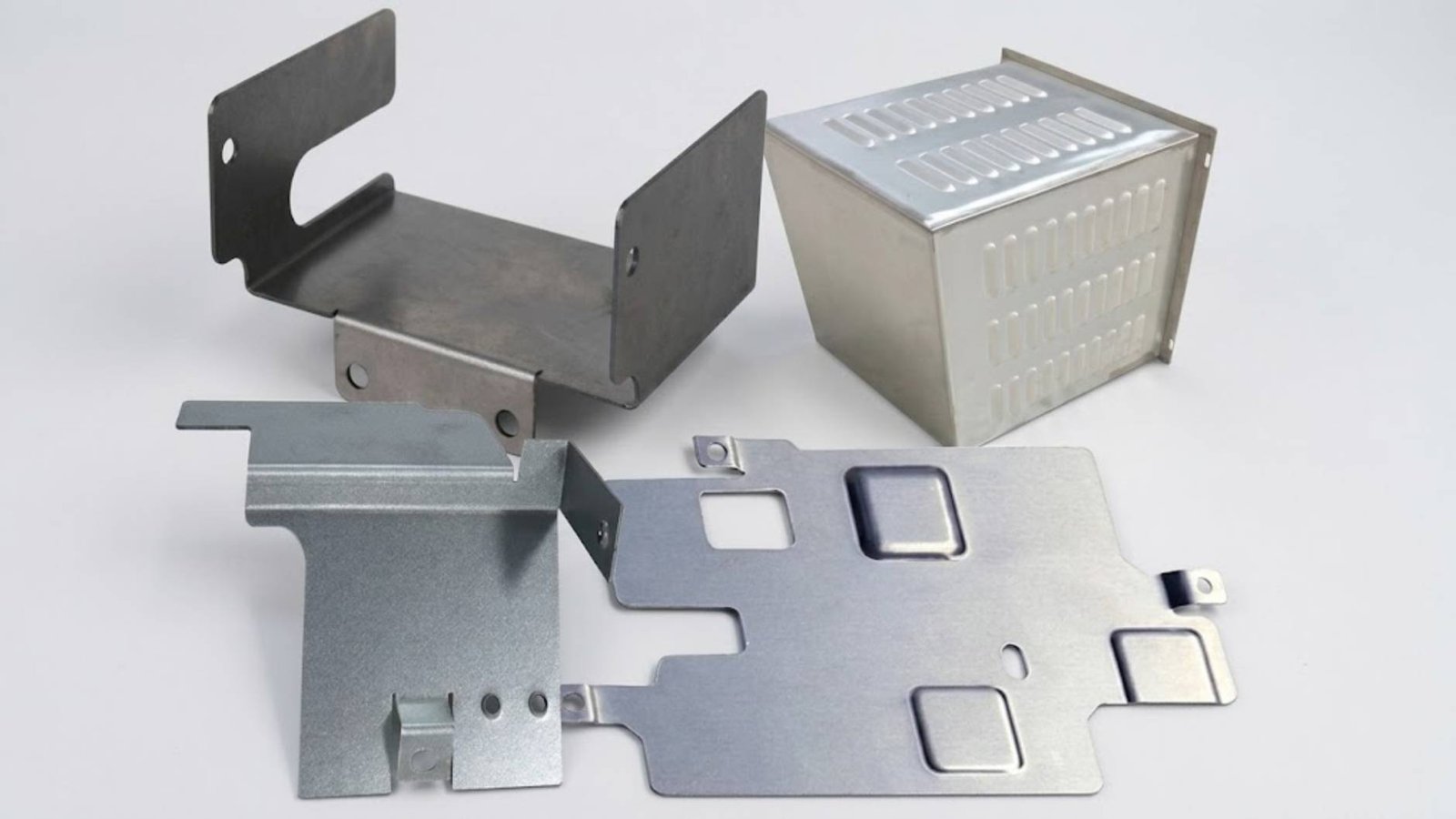
- Medical: Precision steel stampings are employed by medical equipment manufacturers in surgical instrument parts and device enclosures. The appropriate stainless steel grade will provide corrosion resistance, durability, and compatibility with the necessary sterilization methods.
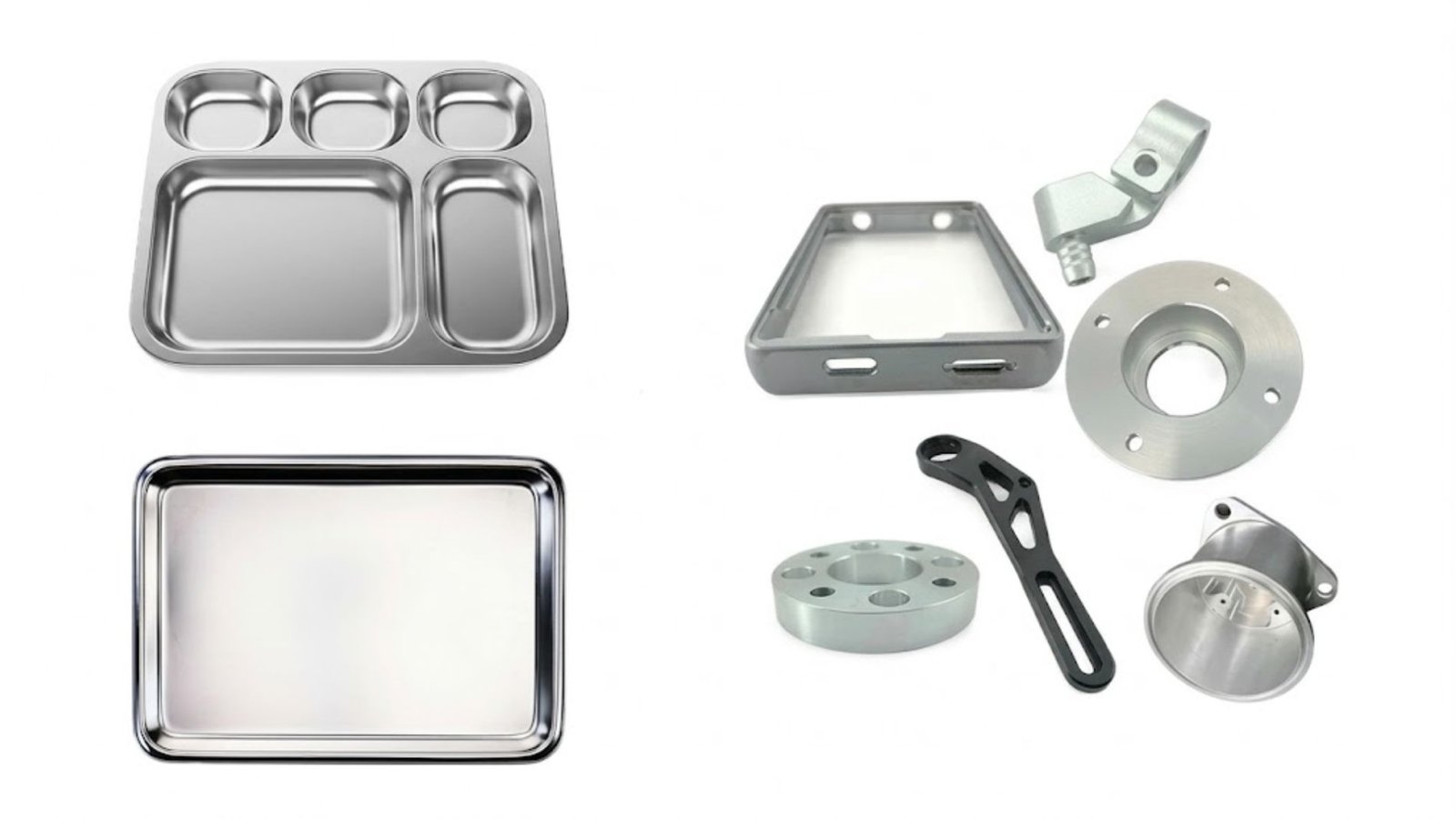
- Aerospace, Agriculture and Consumer Goods: These industries employ steel stampings for equipment brackets, machinery parts, hardware and product casing. The type of material and tolerances of the manufacture vary with the specific application.
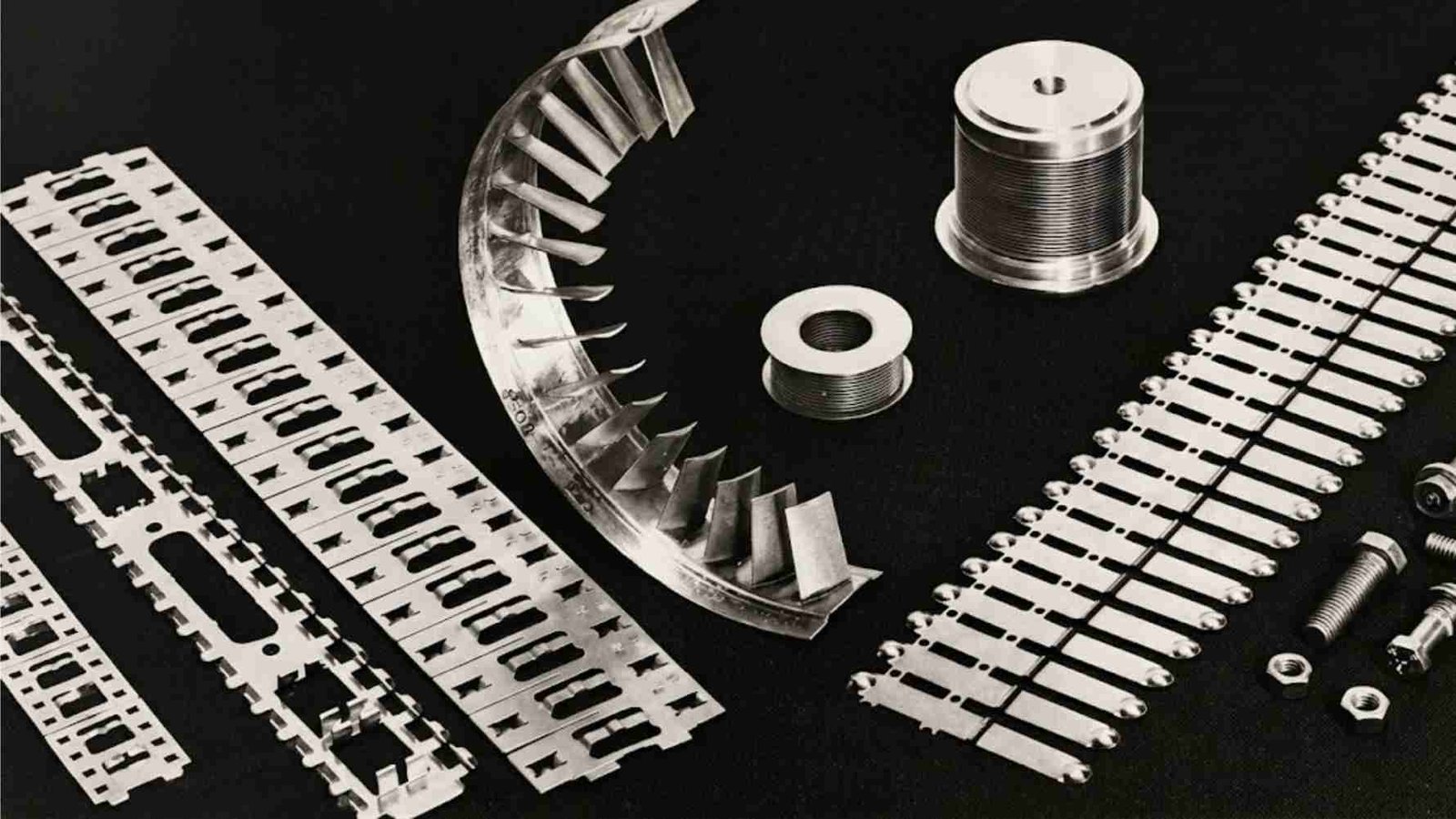
Design considerations and common challenges
Common manufacturing challenges that should be considered when designing stamped metal parts include ensuring quality and dimensional accuracy. Die compensation is necessary for springback, and minimizing the die clearance and sharpness of the die reduces burrs. To avoid wrinkling and tearing for drawn parts, blank holder force, radii, and lubrication should be adjusted accordingly. Select appropriate material grades and thicknesses for flatness and tolerances. In general, maintain hole diameters of at least the material thickness, position holes and bends clear of edges and provide generous bend radii. Please check these guidelines with your manufacturer. Use appropriate finishes such as zinc, nickel, chrome, powder coat, paint or electropolishing for stainless steel.
Design and finishing considerations for stamped steel sheet
Hole sizes, bend locations, radii and realistic tolerances should be taken into account when designing stamped steel sheets. Ensure hole diameters are not less than the thickness of the material and are kept clear of bends and edges. There are adequate bend radii to avoid cracking and spring-back allowances to assist with dimensional accuracy. Consider using zinc or nickel plating, then chrome plating, powder coating, painting, stainless steel passivation, electropolishing or galvanising for finishing, depending on corrosion exposure and appearance. Further secondary processing such as heat treatment, welding and assembly can be used to satisfy application requirements.
Masion: Sheet metal stamping and fabrication partner
Finding a quality stamped steel supplier means finding one that has in-house tooling, press and finishing. Headquartered in China, Ningbo, Masion has more than 7 million sheet metal parts produced and more than 400 employees since 2007. It has built-in service capabilities such as laser cutting, CNC punching, stamping, bending, robotic welding, riveting, tube processing, plastic injection moulding, assembly and surface finishing. Design for manufacturing (DFM), prototyping, quality inspection, and contract manufacturing can reduce supplier handoffs as you transition from prototype to production. Masion is used by automotive, electronics, medical, robotics, energy, construction, and industrial automation industries, and DFM reviews can save on tooling costs.

Conclusion
Steel stamping is a cost-effective method to manufacture metal parts that are strong, accurate, and repeatable, and that is applicable in many industries. To meet the performance requirements and to control the production costs, the right steel grade, stamping press, die design, and finishing method should be selected. Knowing how stamping works and how to design it will also minimise material waste and manufacturing defects. To achieve a better result, it is advisable to engage an experienced manufacturing partner at the beginning of the design process. Masion’s tooling expertise and design for manufacturing support can help to streamline the production of your products from prototype to large-scale manufacturing.
FAQs
What factors influence stainless steel stamping costs and lead times?
Stainless steel stamping costs are directly related to the complexity of the die, the grade of material used, material thickness, tolerances, quantity, scrap, and finishing. Progressive dies are more expensive in the beginning but are less expensive per unit as volumes increase. Masion’s design for manufacturing reviews optimise tooling and eliminate unnecessary costs.
How to stamp steel while maintaining consistent dimensions?
Ensure dimensional consistency using precision dies, accurate feeding, proper lubrication and regular inspections. Pilot pins ensure better alignment, and springback compensation leads to better forming accuracy. Dimensional variations are detected early with statistical process control and with the use of a CMM, thereby minimizing scrap and assuring consistent quality.
Which steel stamps for metal work best on hardened steel?
SKD11 tool steel stamping has high hardness, wear resistance and sharpness. The marking ends of industrial impact stamps are usually around 62- 63 HRC, and the tempered striking ends are around 32-40HRC. Pneumatic dot peen marking or laser etching may prove more effective on very hard parts.
How do stamped steel parts compare with machined metal components?
Stamped steel parts are good for high-volume production with quick turnaround and low per-part cost (excluding tooling cost). For various production needs, Masion can provide stamping, CNC punching, and fabrication services, meeting the needs of complex shapes and tolerances of ±0.01 mm.
How do you choose the right steel stamping press tonnage?
Determine cutting tonnage based on cut perimeter, thickness of material, and the tensile strength of material. Add bending and stripping forces, and add a 20-30% safety margin. Review the press tonnage curve prior to production. In addition to assessing tooling requirements and manufacturing feasibility, Masion’s engineering support is provided.